

Most early-stage businesses treat SEO as something to figure out later — after the product is stable, after paid acquisition gets expensive, after someone finally asks why organic traffic is flat. That sequencing is a mistake, and it costs real time.
The businesses that build durable organic acquisition do it by treating search as a channel with its own economics, not as a background task someone handles between other priorities. The earlier you establish that foundation, the earlier it starts compounding. And for a business trying to reach its first 1,000 customers, the compound effect of even modest early SEO work is meaningful.
This guide is structured for founders and early-stage marketing leads who understand their business but are still learning how organic search works. The goal is not to make you an SEO expert.
The goal is to give you a clear enough picture that you can execute the most important work yourself, make better decisions about what to outsource, and avoid the early mistakes that take months to unwind.
Start With the Right Strategic Frame
Before touching a keyword tool or writing a word of content, get clear on one thing: who is searching for what you offer, and what are they trying to accomplish when they search?
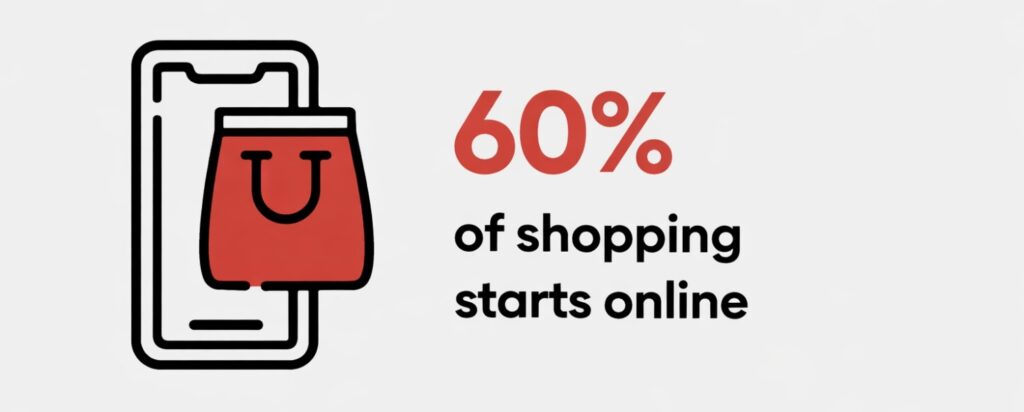
Search intent is the foundation of everything.
- There are buyers who know exactly what they want and are searching for a place to purchase it.
- There are researchers who are evaluating options and want to understand trade-offs.
- There are people who have a problem and don’t yet know your solution exists.
Each of these requires a different type of content, and confusing them produces content that ranks for the wrong queries or converts poorly, even when it ranks.
For a new business, the practical question is: Which intent categories represent your highest-value acquisition opportunities right now?
Transactional intent (people ready to buy) produces the fastest conversion but faces the most competition. Informational intent (people researching or learning) is often easier to rank for early on and builds brand recognition over time.
Most effective early-stage SEO programs work both: informational content builds topical authority and trust, transactional content captures demand from people already in buying mode.
Knowing this before you do keyword research changes how you evaluate keywords, not just by volume, but by where they sit in your customer’s decision journey.
Keyword Research That Actually Maps to Revenue
Keyword research for a new site has one core constraint: Domain authority is low, so competing for high-volume, high-competition terms is not a realistic near-term play.
The practical approach is to find the queries your ideal customer is actually using, prioritize the ones where you can realistically rank within six to twelve months, and build out from there as authority develops.
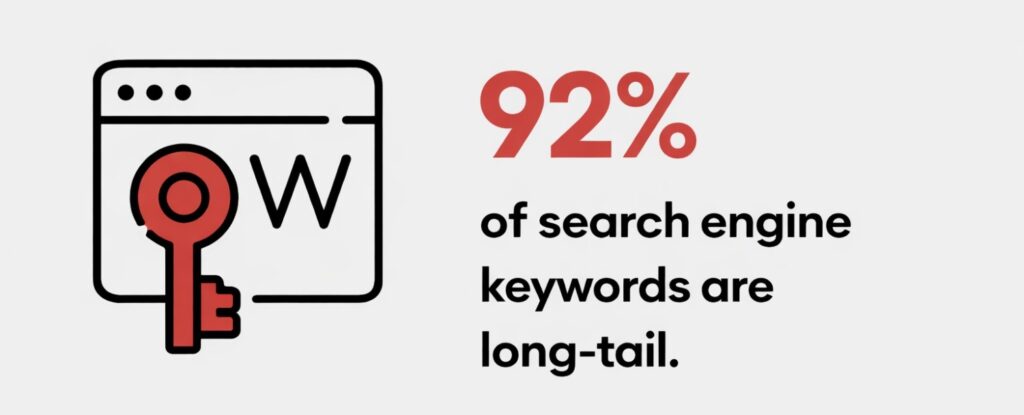
Start with specificity, not volume.
Long-tail keywords (phrases of three words or more) reflect specific intent, face less competition, and often signal higher purchase readiness. A search for “buy handmade soy candles online” is more commercially valuable than a search for “candles,” even if the latter gets ten times the monthly volume. You cannot realistically rank for “candles” as a new site. You can rank for the former within a reasonable timeframe.
Build a list using multiple sources.
Google’s autocomplete and “People Also Ask” features are underrated starting points; they show you exactly what language real users are using. Supplement with tools like Google Keyword Planner (free), Ahrefs, or Ubersuggest to validate search volume and assess competitive difficulty. The goal is a working list of 20 to 40 terms across different intent categories, not an exhaustive taxonomy of your industry.
Group by intent and funnel stage.
Once you have a list, sort it. Which keywords indicate someone ready to buy? Which indicates someone researching? Which indicates someone who has a problem your product solves but doesn’t know it yet? That grouping dictates your content strategy, not the keywords themselves.
One common early mistake: Optimizing for keywords that are technically related to your business but attract the wrong audience. A business selling premium handmade candles that ranks for “cheap candles” is not acquiring quality customers; it’s generating traffic that dilutes conversion metrics and confuses search engines about who the site is for.
Alignment between keyword, content, and audience is more important than volume at this stage.
On-Page SEO: The Basics That Actually Move Rankings
On-page optimization is the work of signaling to search engines what each page is about and why it deserves to rank. For a new site, getting this right across your core pages is one of the highest-leverage things you can do.
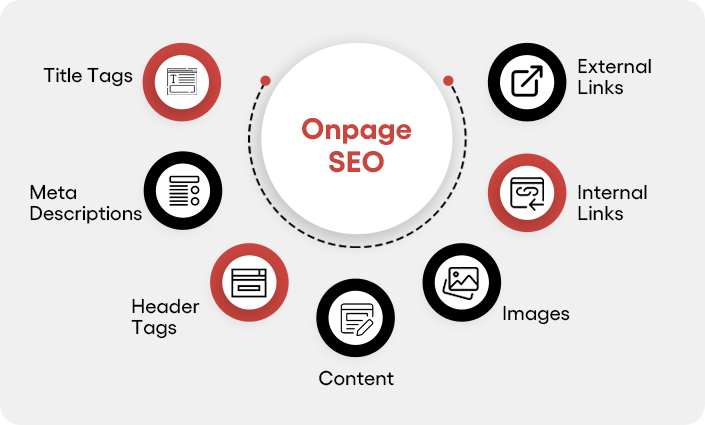
Title tags are the most direct signal. Each page should have a unique title tag that includes the primary keyword you’re targeting for that page, positioned toward the front. Keep it under 60 characters so it displays cleanly in search results. “Buy Handmade Soy Candles — [Brand Name]” is cleaner and more effective than “Welcome to Our Store | We Sell Candles and More.”
Meta descriptions do not directly influence rankings, but they influence click-through rates, which do. Write a one to two sentence description that explains what the page offers and gives someone a reason to click. Include the primary keyword naturally. Treat it like an ad copy, not a filing label.
Headings (H1, H2, H3) serve two purposes: they help search engines understand page structure, and they help users scan content quickly. Each page should have one H1 that includes the primary keyword. Use H2s and H3s to organize supporting content. Do not stuff keywords into headings where they don’t belong; forced optimization is readable to both algorithms and humans.
Body content should address the topic comprehensively, use related terms and concepts naturally, and answer the specific question someone was asking when they searched that keyword. Thin content — pages with only a few hundred words that don’t actually explain anything — rarely rank well and erode overall site quality.
Image optimization is frequently skipped and frequently valuable. Use descriptive file names (not “image001.jpg”), write alt text that describes the image accurately and includes relevant terms where natural, and compress images to avoid slowing down page load.
Content Strategy: Building Authority, Not Just Traffic
Content is where early-stage SEO either becomes a genuine acquisition channel or a time sink that produces rankings no one converts from. The difference is strategic clarity about what you’re publishing and why.
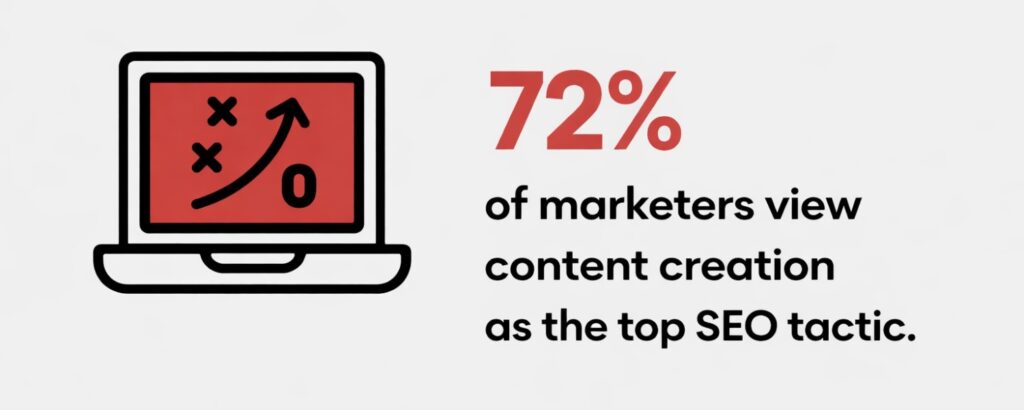
The goal of content is not to rank. The goal is to acquire customers.
Rankings are the mechanism. This distinction changes how you evaluate content ideas.
A topic might have significant search volume but attract researchers who will never convert. Another topic might have modest volume but attract people in an active buying mode.
For a business with limited content resources, the latter is almost always worth more.
Solve real problems, not imagined ones.
The most effective early content answers the specific questions your target customers are actually asking.
What are the objections that come up in sales conversations? What do people search for before buying your product? What do new customers need to know to get maximum value?
Those are your content briefs. Generic industry content that doesn’t reflect genuine customer insight tends to rank, if it ranks at all, for queries that don’t drive revenue.
Build topical depth over breadth.
Search engines reward sites that demonstrate genuine authority on a subject.
A new site that publishes ten well-researched, interconnected pieces on a specific topic will build authority in that area faster than a site that publishes one post each on twenty different topics.
Identify the two or three core subject areas most relevant to your customers’ buying journey and build depth there first.
A practical content structure for a new site: A small set of cornerstone pages that cover your core topics comprehensively, supported by more specific posts that go deeper on individual questions. Internal links between them reinforce topical relevance and help search engines understand how the content relates.
Featured snippets are worth targeting from the start.
Position Zero, the answer box at the top of search results, is disproportionately visible and often achievable for specific, question-based queries even without high domain authority.
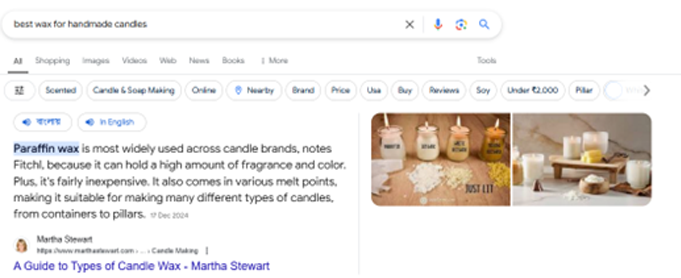
Structure answers clearly: a direct one to two sentence response to the question, followed by supporting detail. Use headers to signal question-answer pairs.
Target queries where the current snippet is weak or the content in the top results is outdated.
Technical SEO: Removing the Barriers to Ranking
Technical SEO is the infrastructure layer. It does not produce rankings on its own, but technical problems can prevent good content from ranking at all.
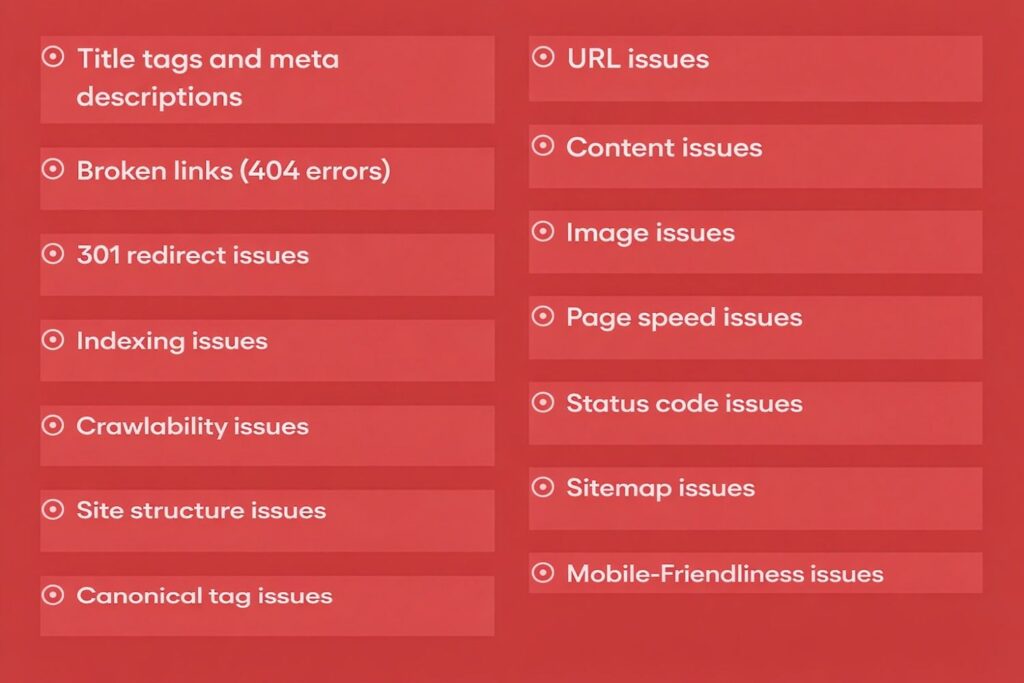
For a new site, getting the basics right once and maintaining them is more important than ongoing technical optimization.
Site speed directly affects both user experience and search rankings.
Google uses Core Web Vitals as a ranking signal, and slow sites perform worse even when content quality is high. Use Google PageSpeed Insights or Search Console’s Core Web Vitals report to identify specific issues.
Common culprits:
- uncompressed images,
- render-blocking JavaScript,
- inadequate hosting infrastructure.
Most of these are fixable without development expertise.
Mobile optimization is not optional.
The majority of searches happen on mobile devices, and Google indexes the mobile version of your site first. Run your site through Google’s Mobile-Friendly Test.
Common issues:
- text too small to read,
- clickable elements too close together,
- content wider than the screen.
A responsive design framework solves most of these.
HTTPS is table stakes. If your site is still running on HTTP, move it.
Google flags non-secure sites, and browsers display security warnings that undermine trust before a visitor even reads a word.
Crawlability and indexation determine whether Google can find and understand your pages at all.
Submit an XML sitemap to Google Search Console. Check that important pages are not accidentally blocked in your robots.txt file. Use Search Console’s URL Inspection tool to verify that key pages are indexed.
These are one-time setup tasks that new sites often skip.
Site structure affects how link authority flows through your site and how clearly search engines understand content relationships.
Keep your URL structure clean and logical. Use internal links deliberately to connect related content. Avoid orphan pages, i.e., content with no internal links pointing to it rarely gets crawled effectively.
A full technical audit is worth doing once your site has meaningful content. Until then, focus on the fundamentals above rather than chasing diminishing returns on technical edge cases.
Backlinks: Quality Over Volume, Always
Backlinks remain one of the strongest signals in Google’s ranking algorithm. A link from an authoritative, topically relevant site signals that your content is worth referencing — and that signal transfers real ranking value.
For a new site, the honest reality is that backlink acquisition takes time and is not fully controllable. The approaches that work are slower than the approaches that get sold in agency pitches.
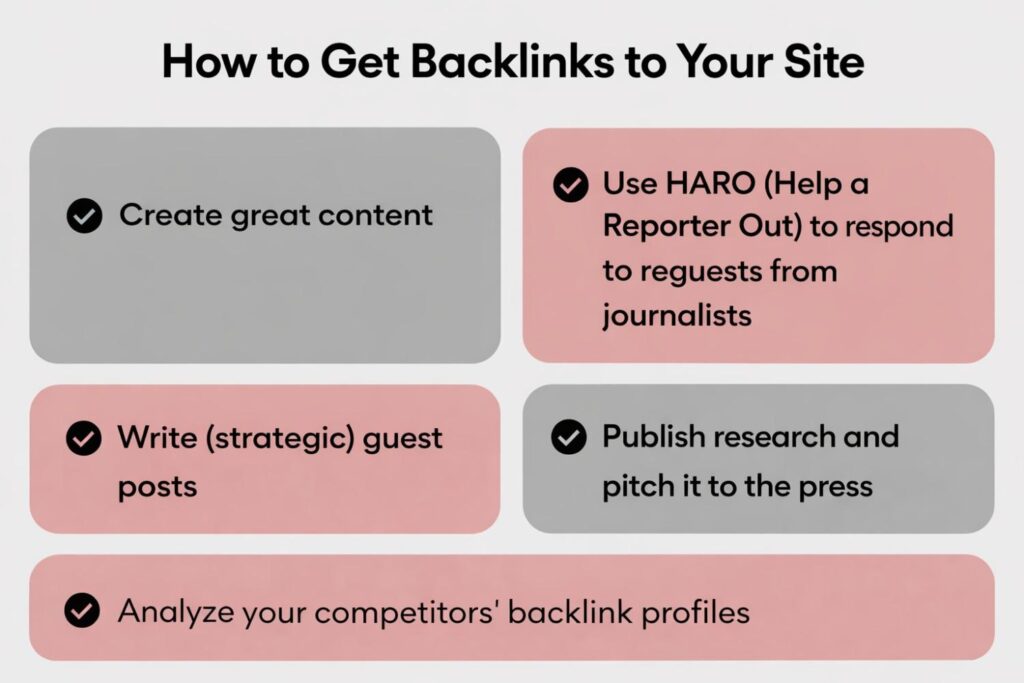
Here is what actually produces durable results:
Create content worth linking to.
Original research, comprehensive guides, genuinely useful tools, or a unique perspective on a well-covered topic attracts links organically over time. This is the most scalable link acquisition strategy and the only one that keeps working without ongoing outreach effort.
Guest contribution to relevant publications.
Writing substantive content for other sites in your industry produces backlinks, builds brand awareness, and extends your reach to audiences you don’t have yet. The quality of the publication matters significantly — a link from an authoritative industry site is worth substantially more than a link from a low-quality guest posting directory. Prioritize relevance and authority over volume.
Broken link replacement.
Find pages on authoritative sites in your niche that link to dead URLs. If you have content that serves the same purpose, reach out to the site owner and suggest your page as a replacement. This works because you’re solving a real problem for them, not just asking for a favor.
HARO and media outreach.
Help a Reporter Out (HARO) connects journalists looking for expert sources with people who can provide them. If you have genuine expertise in your space, this is one of the most efficient ways to earn high-authority backlinks early on.
One important constraint: Avoid any form of purchased links or link schemes. Google’s ability to detect manipulative link profiles has improved substantially, and the penalties (manual actions or algorithmic demotions) can set a new site back significantly.
The risk-adjusted math on paid links is terrible for any business planning to operate long-term.
Local SEO: Often the Fastest Path to Early Revenue
If your business has any geographic dimension — a physical location, a service area, or delivery within a specific region — local SEO deserves disproportionate early attention.

Local SERPs are less competitive than national ones, the signals required to rank are achievable early on, and the intent behind local searches is often strongly transactional.
Google Business Profile is the starting point.
Claim and fully complete your listing: accurate business name, address, phone number, category, hours, website, and a genuine description that includes relevant keywords. Add photos.
This is free and directly affects your visibility in Google Maps results and the local pack that appears in many search results.
Consistency across local citations matters.
Your business name, address, and phone number should appear identically across every directory listing — Google, Yelp, Apple Maps, Bing Places, and any industry-specific directories relevant to your category.
Inconsistencies create ambiguity for search engines and can suppress local rankings.
Customer reviews are a local ranking signal.
The volume, recency, and rating of your reviews all contribute to local visibility. Build a process for requesting reviews from satisfied customers — a simple follow-up message after a positive interaction, a QR code at point of sale, a prompt in your post-purchase email sequence.
Respond to reviews, including negative ones, in a way that demonstrates you’re engaged and customer-focused.
Location-specific landing pages are worth building if you serve multiple areas.
A page optimized for “handmade candles in [city]” will outperform your homepage for searchers in that city.
These pages need genuine, specific content, not just a template with the city name swapped in.
Competitive Analysis: Find the Gaps Others Have Left Open
Understanding your competitive landscape in search is not about copying what others are doing. It’s about identifying where the opportunities exist that your competitors have missed or underserved.
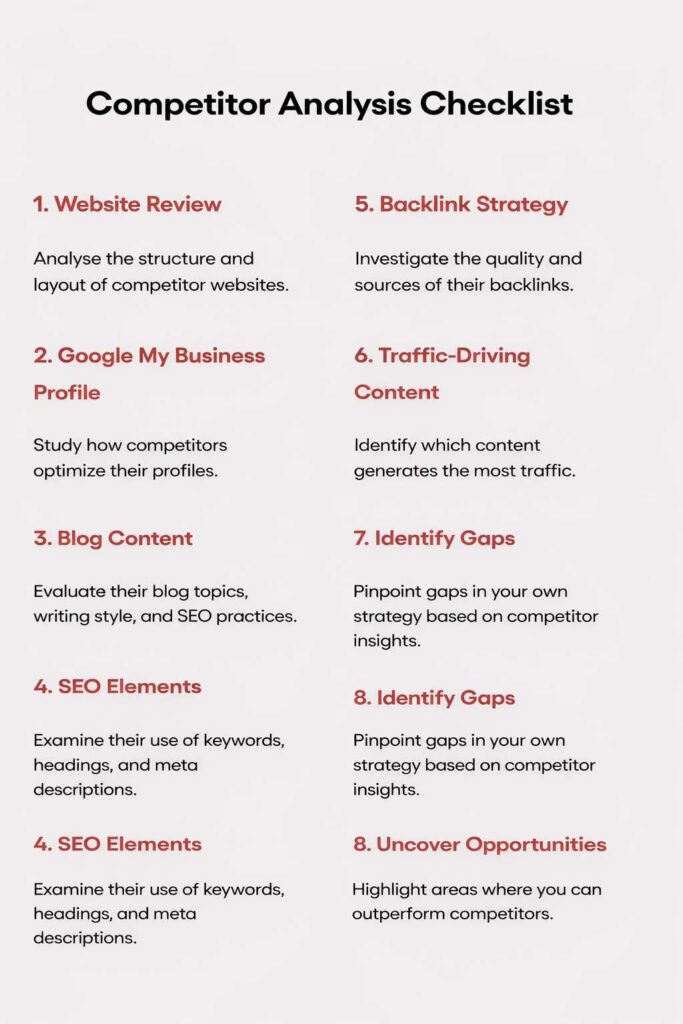
Start by identifying which sites currently rank for your target keywords. Look at their content:
- How comprehensive is it?
- How recent?
- What questions does it fail to answer?
- What intent does it poorly serve?
Every gap in their coverage is a potential opening.
Examine their backlink profiles using tools like Ahrefs or SEMrush.
- Which sites are linking to your competitors but not to you? That’s your outreach target list.
- Which types of content earn the most links in your niche? That informs your content investment decisions.
Look at their technical performance and page experience.
- A competitor with strong content but a slow, difficult-to-navigate site is vulnerable to a well-optimized challenger.
- A competitor with weak content but strong backlinks may be worth outranking at the content level.
The most useful competitive analysis is not a comprehensive audit; it’s identifying the two or three specific angles where you can build a meaningful advantage faster than you could compete head-on.
For a new site with limited resources, finding and exploiting those angles is the fastest path to meaningful organic traction.
Measuring What Actually Matters
Tracking SEO performance is not optional, but tracking the wrong things is nearly as harmful as not tracking at all.
The goal is to connect SEO activity to business outcomes, not to monitor vanity metrics that feel like progress but don’t map to revenue.
Organic traffic is the starting point, but segment it.
Traffic from informational queries that never convert is not the same as traffic from high-intent buyers. Use Google Analytics to track not just session volume but conversion rates by traffic source, landing page, and keyword category.
Keyword rankings are useful as leading indicators.
If pages you’ve recently optimized are moving from page three to page one, that’s a signal that the work is producing results before traffic volumes shift meaningfully. Use Google Search Console for keyword tracking; it’s free and pulls directly from Google’s index.
Conversion metrics are the real measure.
Organic-assisted conversions, organic-attributed revenue, and lead quality from organic channels are the numbers that tell you whether SEO is contributing to growth or just generating activity. Set up goal tracking in Google Analytics and make sure your attribution model captures organic’s role in the funnel accurately.
Content performance should be reviewed regularly.
- Which pages are driving the most qualified traffic?
- Which are generating clicks but not converting?
- Which have significant impressions but poor click-through rates (suggesting title tag or meta description issues)?
This data tells you where to invest editorial effort for maximum return.
A monthly review of these metrics with a clear benchmark against the prior period is sufficient for most early-stage businesses. Weekly monitoring is rarely actionable at this stage and creates a false urgency around normal fluctuation.
What the First Twelve Months Should Look Like
Setting realistic expectations matters. SEO compounds, but it compresses slowly at first and accelerates over time. Here is an honest timeline for a new site executing the fundamentals consistently:
Months one through three are infrastructure, technical setup, keyword research, on-page optimization across core pages, foundational content, and initial backlink acquisition.
You may see some early movement on long-tail keywords with low competition. Do not expect significant organic traffic yet.
Months four through six are the growth phase beginning.
If the foundation is solid, this is when you typically start seeing consistent ranking movement, especially on the informational content you published early. Traffic begins to climb. Some transactional pages start appearing in results.
Months seven through twelve are where the compounding becomes visible.
Rankings consolidate, backlinks accumulate, and topical authority builds. Organic begins to contribute meaningfully to acquisition. The cost per customer from organic is dropping relative to paid.
This timeline assumes consistent execution without major technical problems or algorithmic penalties. It also assumes a level of competitive difficulty that is realistic for most early-stage businesses.
If you’re in a space dominated by established players with years of SEO investment, the timeline extends accordingly.
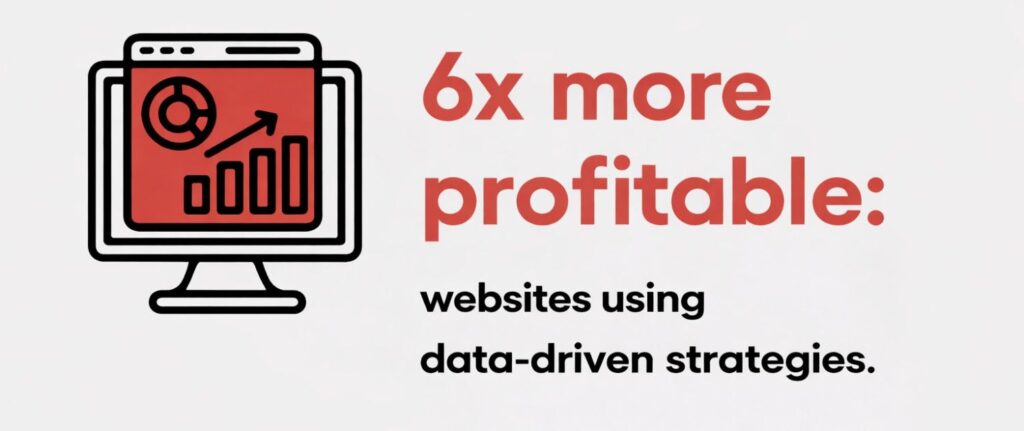
The businesses that succeed with SEO are not the ones that found a shortcut. They’re the ones who executed the fundamentals consistently and gave the channel enough time to perform.
Prepped to Hit Your First 1000 Customers?
If you want a candid assessment of where your site stands right now — what’s working, what’s holding you back, and where the fastest gains are — that’s a conversation worth having before you invest further in a direction that may need adjustment.