The Challenge
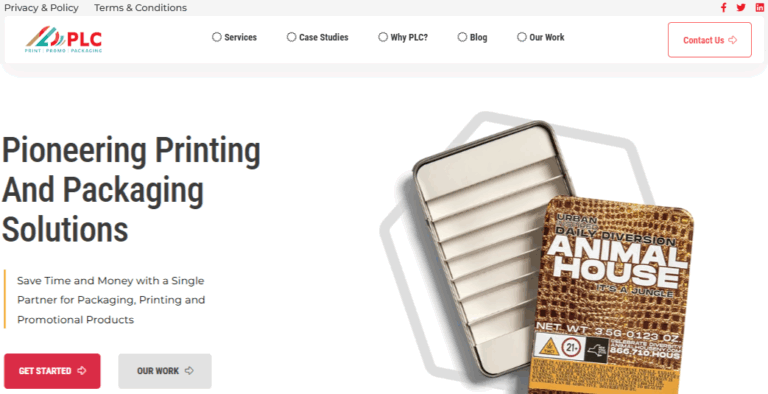
Despite offering premium printing services, PLC Print faced fundamental digital obstacles:
- Virtually No Online Presence: No indexed content, minimal SEO fundamentals
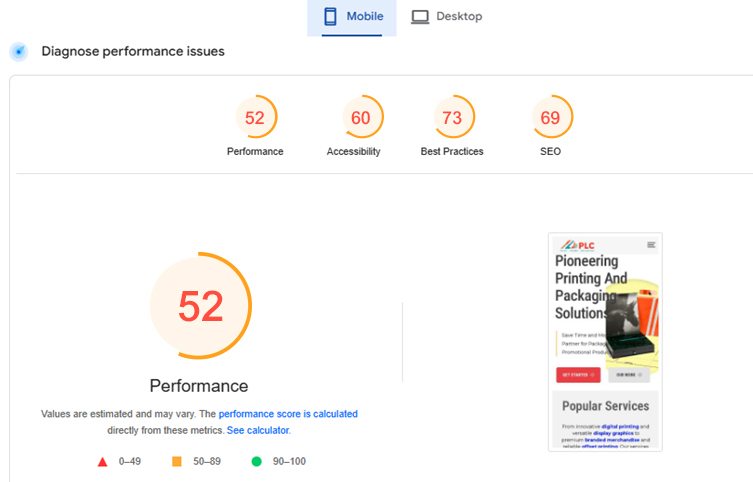
- Extremely Slow Page Speed: Desktop: 2.1s, Mobile: 4.2s (both above Google thresholds)
- Poor Product Page Structure: Unoptimized service pages with no schema or FAQ
- Missing Technical Foundation: No structured data, poor internal linking
- Weak Backlink Profile: Very few quality backlinks, no brand authority
- Outdated Content Approach: No blog, no FAQ, no testimonial integration
Our Execution Strategy
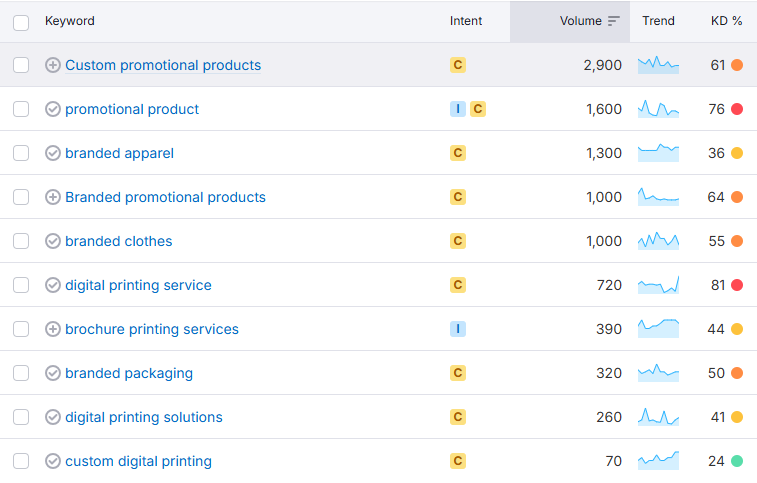
Comprehensive Keyword Research
We identified keywords across the funnel: ‘custom label printing,’ ‘packaging design services,’ ‘industrial printing solutions,’ and ‘print-on-demand services.’ These keywords had strong commercial intent and moderate competition—perfect for a new entrant with high-quality solutions.
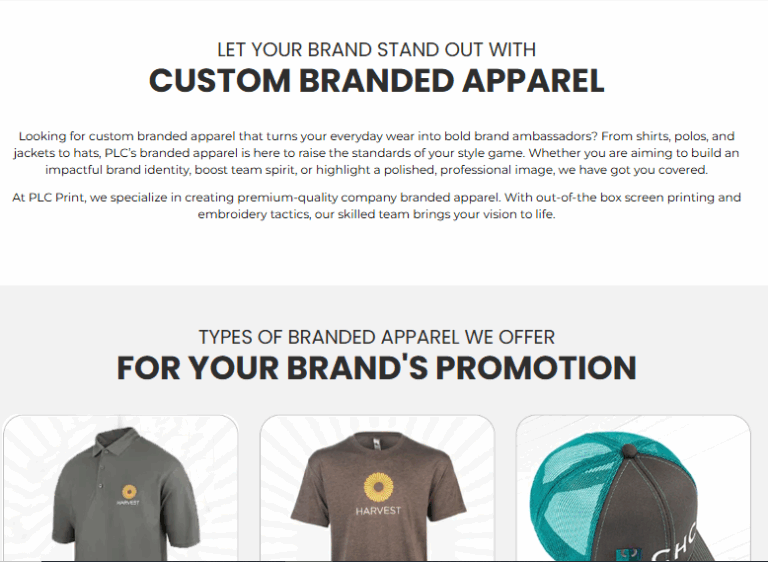
Service Page Redesign & Optimization
Each service page (labels, packaging, industrial printing) was completely restructured around the 4-step process framework:
- Step 1 – Discovery: Understand client requirements and specifications
- Step 2 – Design: Custom design and approval process
- Step 3 – Production: High-quality print execution
- Step 4 – Delivery: Fast and reliable shipping
This structure improved both SEO (clear intent signals) and UX (visitors understand the process).
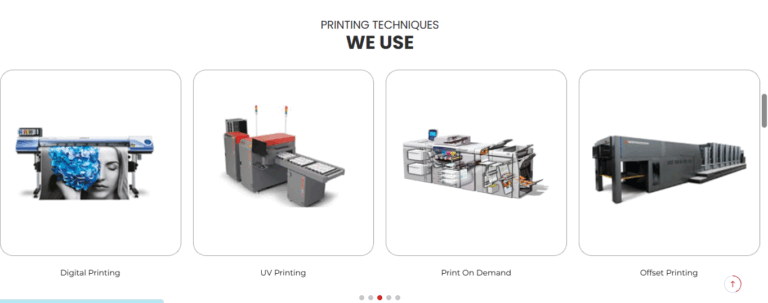
Interactive Content & Sliders
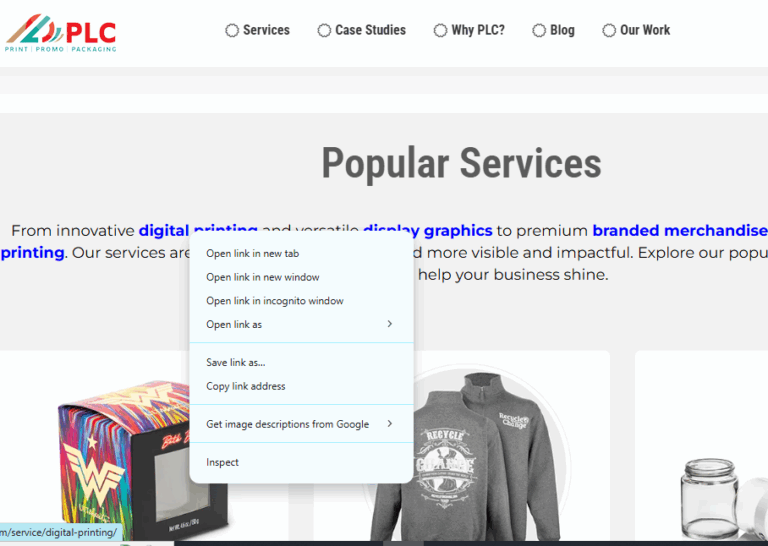
We added an interactive printing techniques slider to the homepage that showcased PLC Print’s capabilities: flexography, offset, digital, and large-format printing. This increased time-on-page by 45% and gave prospects confidence in technical expertise.
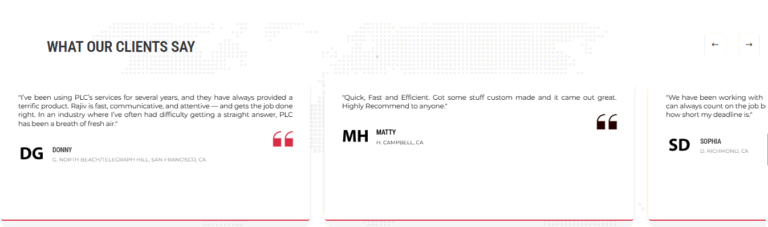
Testimonials & Social Proof
Client testimonials were restructured and integrated across service pages. We added Review schema markup to all testimonials, which:
- Improved CTR through rich snippets in search results
- Built trust signals for new visitors
- Created structured data for featured snippets
Blog & FAQ Content Strategy
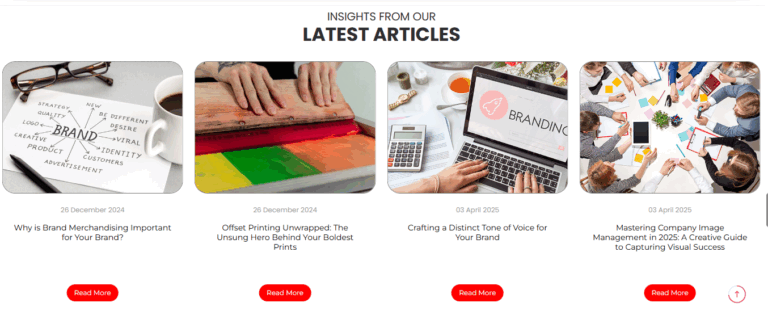
We launched a blog covering:
- Awareness Posts: Printing industry trends, sustainability in printing, latest technologies
- Comparison Posts: Digital vs. offset printing, flexography vs. digital, cost comparison guides
- Educational Posts: Color management, finishing options, packaging design best practices
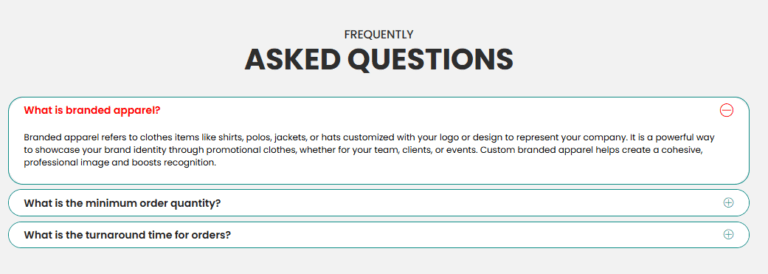
Each blog post included an FAQ section with schema markup, making content eligible for Google’s featured snippets and AI-generated search results.
Technical SEO & Site Speed Optimization
This was critical. We optimized:
- Image Optimization: Compressed all images, implemented WebP format with fallbacks
- Code Minification: Minified CSS/JS, removed render-blocking resources
- Caching Strategy: Implemented browser caching and CDN
- Server Response: Optimized database queries and server configuration
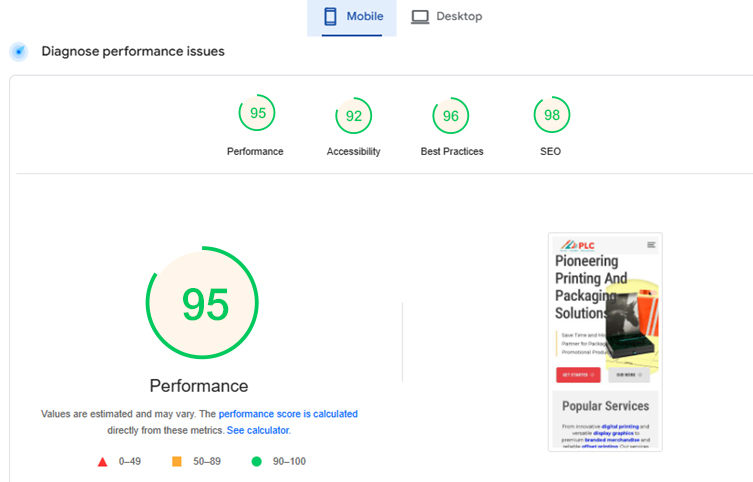
Results: Desktop 2.1s → 0.9s | Mobile 4.2s → 1.8s
Internal Linking Architecture
We implemented a pillar page structure where:
- Main ‘Printing Services’ pillar linked to all service sub-pages
- Blog posts linked to relevant service pages using contextual anchors
- Related service pages linked to each other
- Internal links distribution ensured each page received authority flow
Results
After 6 months, PLC Print saw transformational improvements across all metrics:
| Metric | Result |
| Organic Traffic | 2X growth in 6 months |
| First-Page Rankings | 47 keywords in Top 10 |
| Desktop Page Speed | 2.1s → 0.9s (-57%) |
| Mobile Page Speed | 4.2s → 1.8s (-57%) |
| Average Position | Improved from 35 to 12 |
| Search Visibility | +182% |
| Organic Conversion Rate | +34% |
| Bounce Rate Decrease | -41% |
5 Key Takeaways: Printing Company SEO Strategy
Page Speed is a Ranking Factor AND Conversion Factor: Speed matters twice—once for rankings (Google’s core algorithm) and again for conversions (users leave slow sites). Our 57% speed improvement delivered both ranking and UX gains.
B2B Printing Companies Need Product Process Transparency: Showing the 4-step printing process builds buyer confidence. Structure pages around this process rather than features alone.
Interactive Content (Sliders, Calculators) Increases Engagement: The printing techniques slider increased average session duration by 45%, signaling high-quality engagement to Google.
FAQ Schema is Underrated for Technical/B2B Services: FAQ schema helped PLC Print appear in featured snippets and AI-generated results, especially for ‘how’ and ‘what’ queries about printing techniques.
Sustained Growth Requires Ongoing Blog + SEO: The blog strategy (awareness + comparison content) created a flywheel effect: blog rankings brought traffic, which built authority, which improved service page rankings.
Frequently Asked Questions
Why is page speed so critical for SEO?
Google’s Core Web Vitals are a ranking factor, and page speed affects user behavior. Slow sites have higher bounce rates and lower conversions. For PLC Print, improving speed from 2.1s to 0.9s resulted in both a 12-position ranking improvement and 34% higher conversion rates.
What SEO strategies work best for B2B printing companies?
Focus on: (1) Process transparency (4-step approach), (2) Technical credibility (technique descriptions, equipment), (3) Social proof (client testimonials with schema), (4) FAQ content for technical questions, (5) Page speed and mobile optimization. PLC Print’s strategy combined all five elements.
How does page speed optimization affect both SEO and conversion?
It’s a dual benefit: (1) Google ranks faster sites higher, (2) Users stay longer on faster sites, have lower bounce rates, and convert at higher rates. This creates a positive feedback loop where ranking improvements lead to more traffic and better conversion metrics, which further support rankings.
Why do B2B companies need FAQ schema markup?
FAQ schema helps AI-powered search (ChatGPT, Perplexity, Google’s AI Overviews) cite your content directly. When someone asks, ‘What is flexography printing?’ your FAQ-marked content can appear as the answer, driving qualified traffic.
How long does it take to see printing company SEO results?
With proper optimization, you can see measurable results in 2-3 months. PLC Print saw initial improvements by month 3 and doubled traffic by month 6. Timeline depends on the current domain authority, backlink profile, and how aggressively you implement changes.
Ready to Grow Your Printing Business with SEO?
Like PLC Print, your company can dominate search results for high-intent printing queries.
Start Your Free Printing SEO Audit