
The Challenge
Market Problem
India’s milk supply chain is plagued by adulteration, reconstitution, and lack of transparency. Consumers struggle to trust dairy quality, and most commercial milk undergoes heavy processing before reaching the table. This reality creates anxiety among health-conscious parents and premium-focused consumers seeking ‘pure’ dairy products.
Incumbent Dynamics
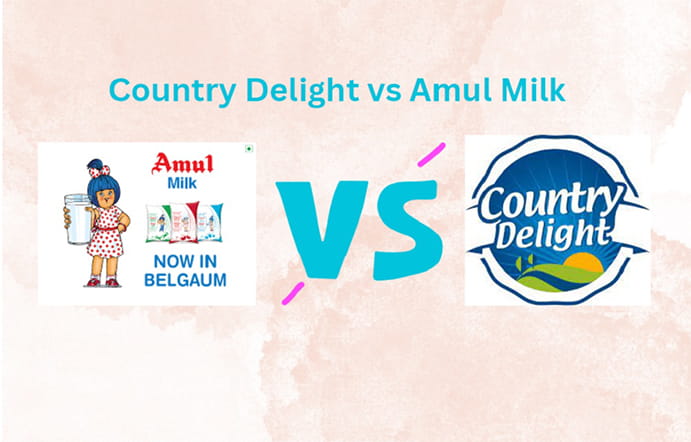
Amul dominates India’s dairy market with 76 years of brand equity, 24.64% market share, and distribution in every corner store and household. Competing against such entrenchment requires differentiation beyond price—exactly what Country Delight attempted.
Business Model Challenges
- CAPITAL INTENSITY: Vertical integration (cattle ownership, cold chains, fleet) requires massive upfront investment
- MARGIN PRESSURE: The direct delivery model is logistically expensive vs. wholesale distribution
- SUPPLY VARIABILITY: Milk production fluctuates based on cattle health, season, and feed
- PROFITABILITY PRESSURE: Heavy advertising spend and operations consume gross margins
- MARKET SKEPTICISM: Convincing consumers to switch from Amul required sustained brand investment
Execution: Building a ₹542 Cr Business
Phase 1: Supply Chain Control & Quality Assurance
Rather than purchasing milk from wholesale markets (vulnerable to adulteration), Country Delight built their own cattle operations. Initially starting with 100 cattle, the founders reinvested profits to scale herds—treating cattle as ‘non-depreciating assets’ that multiply over time. Real-time digital monitoring tracked milk quality at source before any processing, creating transparent supply chain visibility unavailable to competitors.
Phase 2: Direct-to-Consumer Subscription Model
Country Delight eliminated retailers and distributors by delivering directly to consumer homes. Subscription-based ordering simplified logistics and created predictable demand. Pricing benefited local farmers through premium payments for ethical production, while consumers received assurance of freshness (delivered early morning) and authenticity.

Phase 3: Product Portfolio Expansion
Beyond milk, Country Delight developed a product ecosystem:
- PANEER: Premium cottage cheese made from pure milk
- CURD: Yogurt with live cultures
- GHEE: Clarified butter for cooking and wellness
- BUTTERMILK: Traditional drink and cooking ingredient
All sourced from local farmers, maintaining supply chain control and narrative consistency.
Phase 4: Digital Marketing & Celebrity Endorsement
Recognizing that direct delivery to 3 lakh households was logistically limited compared to Amul’s ubiquity, Country Delight invested heavily in digital awareness:
CELEBRITY ENDORSEMENTS: Sonali Bendre and Kajol—both lifestyle influencers—represented premium, health-conscious living to urban aspirational consumers.
EMOTIONAL AD CAMPAIGNS:
- ‘Black Tea’: Nostalgic storytelling about childhood memories and mother figures, subtly positioning Country Delight as ‘pure’ and ‘untainted’
- ‘Technology ka Kamaal’: Bridging traditional farming with modern urban convenience, emphasizing freshness + modernity
INFLUENCER PARTNERSHIPS: Wellness and health influencers amplified messaging around pure milk and healthy living to engaged audiences predisposed to premium products.
Phase 5: Scale & Profitability Path
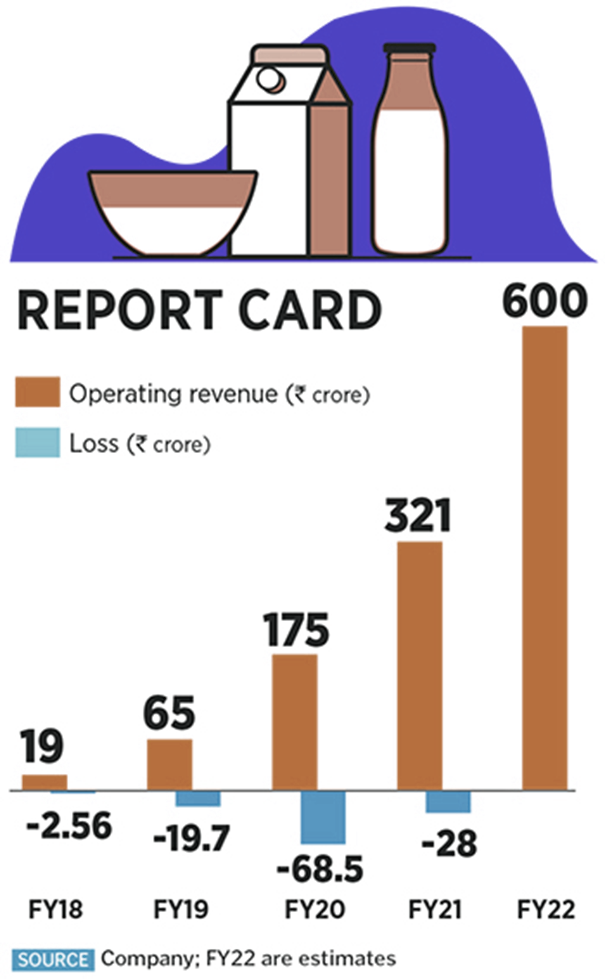
As of the case study date, Country Delight was operating at net loss (₹186.4 Cr loss against ₹542.6 Cr revenue) while rapidly scaling. This reflects a classic startup growth strategy: investing in customer acquisition and supply chain at the expense of short-term profitability. The company projected profitability in 8-10 months—evidence of path-to-profitability confidence.
Phase 6: Competitive Positioning
Against Amul, Country Delight differentiated on:
- AUTHENTICITY: ‘Farm to table’ narrative vs. Amul’s industrial scale
- PREMIUM QUALITY: Higher price reflects genuine supply chain control and farmer compensation
- CONVENIENCE: Home delivery for busy urban professionals
- DIGITAL NATIVE: Subscription + app-based ordering appealed to tech-forward consumers
The strategy wasn’t to out-Amul Amul (impossible) but to own the premium, authentic segment.
Results: Scaling to ₹542.6 Cr Revenue
Growth Metrics
| Metric | Value |
| Annual Revenue | ₹542.6 Cr |
| YoY Revenue Growth | 1.6X |
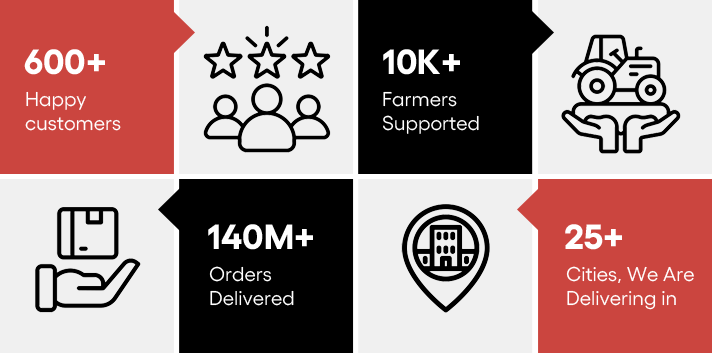
| Households Served | 3+ Lakh (300,000+) |
| Monthly Orders | 5+ Million |
| Delivery Personnel | 6,000 |
| Revenue Growth Rate | 5-7% MoM (monthly) |
| Net Loss | ₹186.4 Cr (growth-phase investment) |
Market Penetration
Country Delight achieved significant presence among urban, health-conscious consumers in major metros.
Advertising & Brand Reach
Digital ad campaigns and celebrity endorsements reached over 5 million viewers, creating awareness among target demographics (busy urban dwellers, health-conscious families, premium-segment consumers).

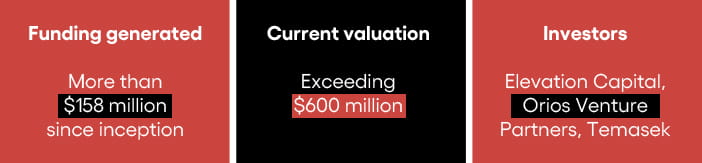
Funding & Valuation
5 Key Takeaways
Vertical Integration Creates Defensibility: Country Delight’s cattle ownership and supply chain control are nearly impossible for competitors to replicate. While capital-intensive upfront, moats built on operations and scale compound over time. Legacy advantages (Amul’s distribution) can be challenged by differentiation + investment, not price competition alone.
Narrative & Trust Trump Price in Premium Categories: Indians have emotional attachments to food and health. Country Delight’s ‘farm-to-table,’ ‘pure milk,’ and ‘farmer-fair’ narratives resonated more than Amul’s economies of scale. Premium positioning worked because the target audience valued authenticity over the lowest cost.
Growth at All Costs Has Limits: ₹186.4 Cr net loss on ₹542.6 Cr revenue (34% net loss margin) is unsustainable in the long term. Country Delight’s 8-10 month profitability projection suggests unit economics were sound, but scale investments were temporarily depressing net income. This is venture-backed math, not a sustainable business reality. Profitability proved essential to validate the model.
Celebrity Endorsements Require Brand Positioning Alignment: Sonali Bendre and Kajol represented wellness, modernity, and aspirational living—perfect proxies for Country Delight’s positioning. Mismatched endorsements waste budget; aligned ones amplify message resonance and customer acquisition efficiency.
D2C Requires Marketing Scale to Compete Against Omnichannel Incumbents: Direct delivery is operationally superior for freshness but economically challenged at scale. Country Delight overcame this by dominating digital marketing (5M+ viewer reach, influencer partnerships), creating awareness that justified premium pricing and home delivery subscriptions.
Frequently Asked Questions
Did Country Delight achieve profitability after the 8-10 month projection?
The case study was published in February 2024 with a profitability timeline of 8-10 months. This was verified by comparing the financials of the company for that period.
How do Country Delight’s unit economics compare to Amul’s?
Amul operates at ~15% net margins (public company data) while Country Delight was at -34% during rapid scaling. Country Delight’s margin structure improved with scale due to:
- Lower per-unit delivery costs,
- Reduced customer acquisition costs (brand awareness),
- Operational efficiencies.
This is a typical venture-backed trajectory.
Could Country Delight expand distribution beyond direct delivery?
Potentially, yes. However, this risks the ‘farm-fresh’ and ‘authentic’ narrative. A hybrid model (direct subscription + select premium retail) might have worked, but it dilutes supply chain control and margins. Country Delight’s competitive advantage lies in direct relationships, not in competing as another retail brand.
Why did the founders choose subscription over traditional wholesale?
The three reasons behind this choice were:
- Higher margins: Direct-to-consumer eliminates distributor & retailer markups;
- Supply chain control: Subscription demand is predictable, allowing optimal cattle herd management;
- Customer loyalty: Recurring revenue creates sticky relationships vs. one-time retail purchases.
Subscription reduces churn risk that plagues new food brands.
What’s Country Delight’s long-term competitive advantage?
If profitability is achieved, the moat is OPERATIONAL: cattle ownership, cold chain infrastructure, and logistics are expensive to replicate. Amul’s advantage is DISTRIBUTION & BRAND LEGACY. Neither can easily acquire the other’s strength, creating sustainable market segmentation (Amul = mass market, Country Delight = premium urban segment).
Build Your Food & Beverage Brand from Farm to Table
Country Delight scaled to ₹542 Cr by controlling quality narratives and customer relationships. Let’s do the same for your brand.
Explore Brand Building & Growth Strategy