The Challenge
Our objective was to analyze and decode Razorpay’s digital marketing strategy, understanding how they achieved:
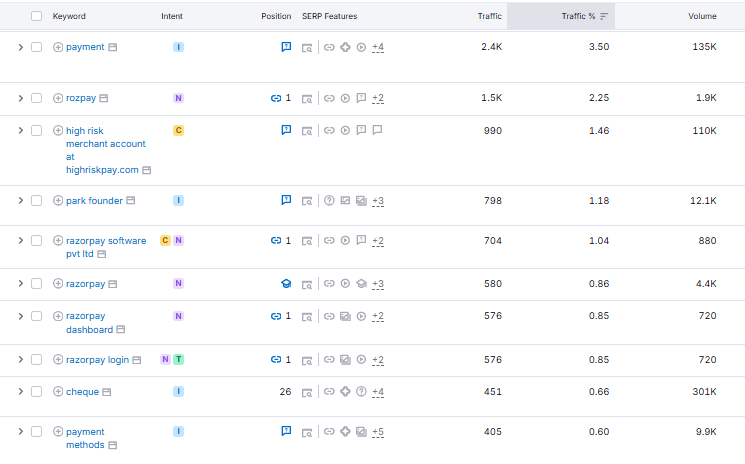
- Industry-leading organic visibility with 2.6M monthly visitors
- Massive keyword portfolio (424K+ keywords ranked)
- Exceptional backlink profile (8M+ links from 26K+ domains)
- Dominant social media presence (1M LinkedIn followers)
- Scaling paid campaigns while maintaining acquisition efficiency (+76% growth
Execution: SEO Strategy & Content Architecture
Razorpay employs a sophisticated Hub-and-Spoke model for content organization:
Hub-and-Spoke Content Model
- Authority Hubs: Core pillar pages covering broad fintech topics (payments, compliance, startups)
- Spoke Content: Detailed articles linking back to hubs, targeting long-tail variations
- Topical Authority: Establishing deep expertise in specific fintech niches
Content Pruning & 6R Strategy
- Refresh: Updated outdated content with new data and examples
- Refocus: Re-optimized articles for higher-intent keywords
- Rewrite: Rewrote underperforming content from scratch
- Republish: Promoted refreshed content across channels
- Recombine: Merged similar articles into comprehensive guides
- Remove: Deleted outdated or low-quality pages
- Result: 122% increase in TOFU (Top of Funnel) organic traffic
Execution: Content Pyramid Strategy
TOFU (Top of Funnel): Fintech Education
- ‘What is a payment gateway?’ – Foundational concepts reaching broad audience
- ‘How do online payments work?’ – Educational content capturing awareness-stage searches
- ‘Startup payment solutions’ – Targeting new business founders
MOFU (Middle of Funnel): Case Studies & Comparison
- ‘Razorpay vs Stripe’ – Competitive comparisons addressing consideration-stage
- ‘Razorpay API documentation’ – Technical content for developers
- ‘How e-commerce businesses increased revenue’ – Case studies proving value
BOFU (Bottom of Funnel): Integration & Implementation
- ‘Razorpay WooCommerce plugin’ – Tool-specific implementation guides
- ‘Integration guides for Shopify’ – Platform-specific documentation
- ‘How to set up recurring payments’ – Feature-specific decision content
Execution: Backlink Profile & Link Building
Razorpay’s 8M+ backlinks from 26K+ domains follow a clear quality-first strategy:
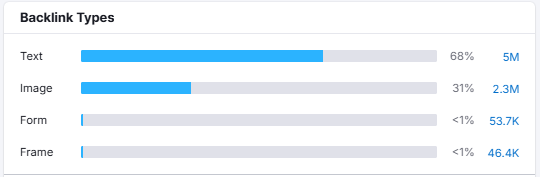
Backlink Distribution by Type
- 68% Text Links: Contextual links within article content (highest SEO value)
- 31% Image Links: Links associated with data visualizations and infographics
- 94% Follow Links: Vast majority are doFollow, passing ranking authority
Domain Diversity & Authority
- Links from fintech publications (TechCrunch, VentureBeat, Forbes)
- Enterprise software directories and B2B marketplaces
- Developer communities and technical documentation sites
- News coverage and press releases from reputable outlets
Execution: Social Media Strategy
Razorpay maintains a presence across multiple platforms with a strategic focus:
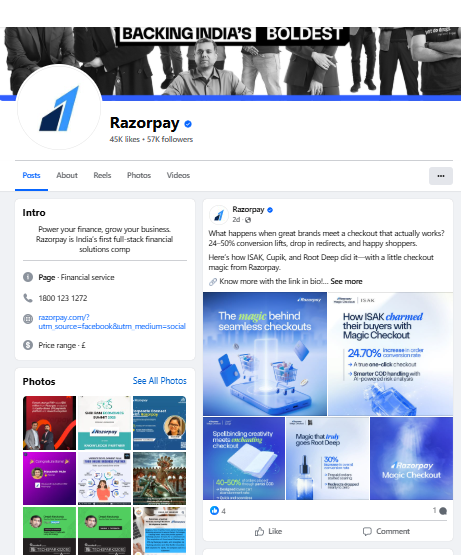
Facebook Strategy (57K Followers)
- Community engagement through educational posts and product updates
- Lead generation campaigns targeting Indian entrepreneurs
- Event promotions and webinar invitations
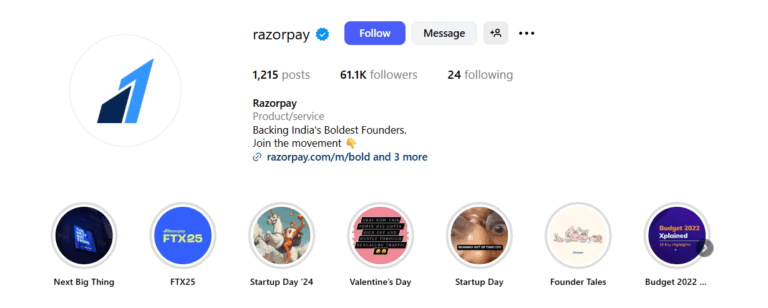
Instagram Strategy (61.1K Followers)
- Visual storytelling about fintech innovation and startup culture
- Customer success stories in carousel and reel formats
- Behind-the-scenes content humanizing the brand
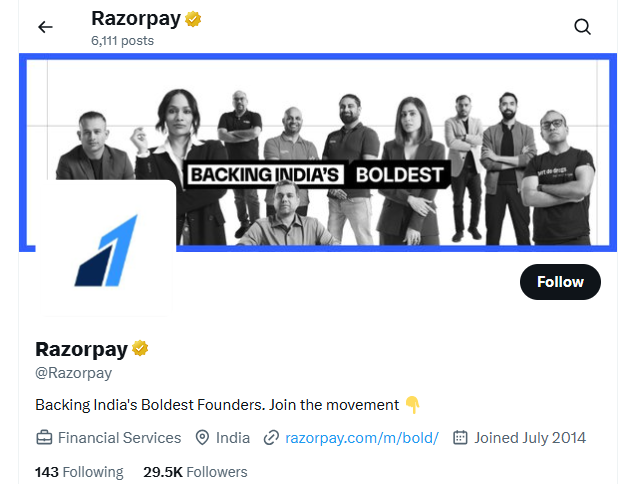
X Strategy (29.5K Followers)
- Real-time updates on the payments industry and fintech trends
- Thought leadership through the founder and executive tweets
- Engagement with the fintech community and developer audiences
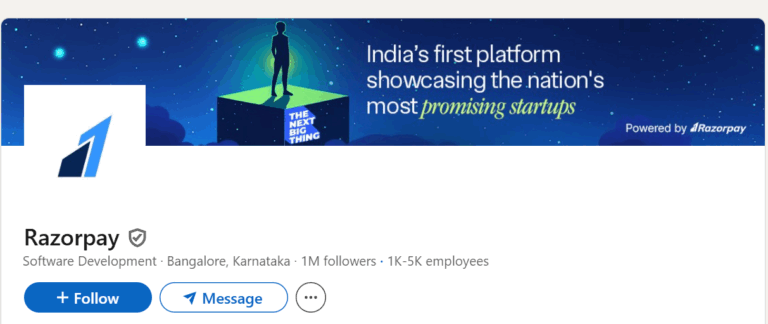
LinkedIn Dominance (1M Followers)
- Industry insights and fintech market analysis
- Employee advocacy and company culture content
- Long-form thought leadership articles and research reports
- B2B lead generation through targeted sponsored content
Execution: Paid Advertising Strategy
Razorpay invests 130.8K monthly paid visitors with a multi-channel approach:
Google Ads: Single Keyword Ad Groups (SKAGs)
- One keyword per ad group for maximum relevance and quality score
- Highly specific landing pages matching each keyword intent
- Dynamic keyword insertion in ad copy for relevance
Performance Max Campaigns
- Automated bidding strategy maximizing conversion value
- Multi-asset creative testing across channels (search, display, YouTube, Gmail)
- Audience expansion through machine learning
Meta Funnel Strategy (Facebook & Instagram)
- Awareness campaigns building brand familiarity through video ads
- Consideration campaigns showcasing features and advantages
- Conversion campaigns with strong CTAs and free trial offers
- Retargeting campaigns to website visitors and engaged audiences
LinkedIn Advertising
- Account-based marketing targeting specific job titles and companies
- Sponsored content reaching decision makers in target industries
- Lead generation forms for B2B enterprise sales
Results & Metrics
| Metric | Result |
| Monthly Organic Visitors | 2.6M (+25% YoY) |
| Keywords Ranked | 424,000+ |
| Total Backlinks | 8,000,000+ |
| Referring Domains | 26,000+ |
| Domain Authority Score | 69 |
| Monthly Paid Visitors | 130.8K (+76% growth) |
| LinkedIn Followers | 1,000,000 |
| Facebook Followers | 57,000 |
| Instagram Followers | 61,100 |
| X Followers | 29,500 |
| Customers Served | 10,000,000+ |
| TOFU Traffic Increase | +122% (content pruning) |
5 Key Takeaways
Hub-and-Spoke Dominance: Building topical authority through interconnected content hubs and spoke articles created a compounding SEO advantage. 424K ranked keywords indicate deep content coverage across the entire buyer journey.
Content Pruning ROI: The 6R framework (refresh, refocus, rewrite, republish, recombine, remove) increased TOFU traffic 122%. This demonstrates that optimizing existing content often yields better ROI than creating new content.
Multi-Channel Integration: Success wasn’t from dominating one channel, but from integrated excellence across SEO (2.6M visitors), Paid (130.8K visitors), and Social (1M LinkedIn followers). Each channel reinforced the others.
Platform-Specific Monetization: Different social platforms served different purposes: LinkedIn for B2B lead gen (1M followers), Facebook for community (57K), Twitter for thought leadership (29.5K). This segmentation maximized ROI per platform.
Authority Through Quality Links: 8M backlinks from 26K domains wasn’t about quantity—it was about quality. 94% doFollow with 68% text-based links indicates genuine editorial mentions, not artificial link schemes.
Frequently Asked Questions
How does Razorpay rank for 424K+ keywords while most fintech competitors rank for <50K?
The hub-and-spoke content model creates extensive keyword coverage across multiple content tiers. Each pillar page targets broad head terms, while spoke articles target long-tail variations. This structure automatically generates thousands of keyword combinations while maintaining thematic relevance and content efficiency.
What’s the relationship between Razorpay’s 1M LinkedIn followers and their 130.8K monthly paid traffic?
LinkedIn serves dual purposes: organic reach through 1M followers (brand awareness) and paid conversion campaigns targeting B2B decision makers. The large follower base enables high organic reach on sponsored content, reducing reliance on paid distribution costs. Additionally, follower growth creates social proof, strengthening paid campaign effectiveness.
How can fintech startups replicate Razorpay’s 2.6M monthly organic visitors without their brand awareness?
Start with niche keywords in underserved segments. Razorpay now targets ‘payment gateway’ but initially focused on ‘Indian payment solutions’. Build topical authority through the hub-and-spoke model in your niche, then expand. The key is deep content ownership in a specific vertical before competing on broad terms. Content pruning and the 6R strategy help early-stage companies compete effectively without massive content budgets.
Why does Razorpay maintain presence on Facebook (57K) and Twitter (29.5K) when their Instagram (61.1K) and LinkedIn (1M) are larger?
Different audiences and content formats. Facebook/Twitter reach older decision makers (CFOs, founders). Instagram captures younger entrepreneurs and cultural narratives. LinkedIn dominates B2B. Razorpay maintains all channels to capture entire buyer personas rather than over-indexing on any single platform. This multi-channel approach reduces platform dependency risk.
How should fintech companies structure PPC when competing against Razorpay’s established brand dominance?
Focus on lower-funnel, intent-driven keywords where brand dominance matters less. Razorpay wins brand searches easily. Target competitor keywords (‘Razorpay alternative’), feature-specific searches (‘multi-currency payment gateway’), and vertical-specific solutions (‘SaaS payment processing’). Emphasize differentiation over feature parity. Use Performance Max for audience expansion, but start with SKAGs for quality control and cost efficiency.
Ready to Build Your Fintech Digital Dominance?
Apply these fintech marketing strategies to your product. Contact Nico Digital for strategic planning.
Get a Fintech Marketing Audit