

Most brands treat the Google Display Network as an afterthought. Budget left over from search campaigns, a few banner ads, set to automatic targeting, and then a surprise when the results are thin.
That is not a GDN problem. That is a strategy problem.
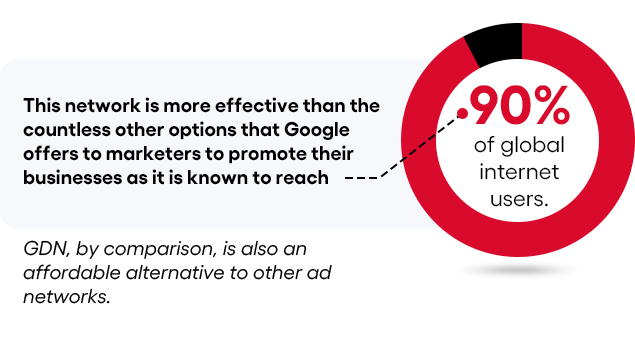
The network itself is substantial. Over 200 million websites, apps, and videos. Reach that extends to roughly 90% of global internet users. Average cost-per-click sits meaningfully below search in most categories. Used correctly, GDN is one of the more cost-efficient channels available for brand building, prospecting, and nurturing audiences that are not yet ready to convert.
The gap between brands that get results from GDN and those that do not is almost never the network. It is how they configure, target, and manage their campaigns.
Here is what actually works.
GDN vs. Search: Why the Distinction Matters Strategically
Before getting into tactics, the strategic frame matters.
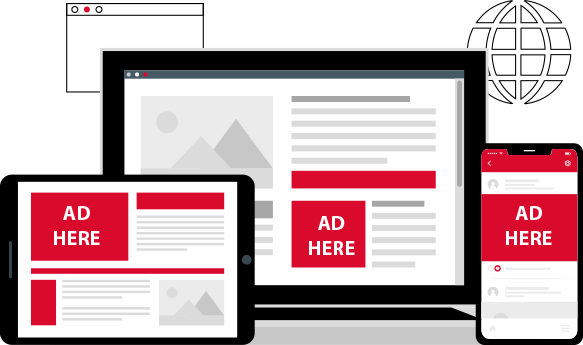
Google Ads runs on two distinct networks. Search places text ads in front of users who are actively querying. Display places visual ads across the broader web in front of users who are browsing, reading, watching, or doing something else entirely.
That difference in user state is everything. A search ad intercepts high-intent demand. A display ad creates or sustains it. These are different jobs, and they require different success metrics, different creative approaches, and different budget logic.
The common mistake is trying to evaluate GDN performance using search benchmarks. Click-through rates on display are lower by design. The average CTR on GDN sits around 0.46%. That looks disappointing next to search. But the cost structure is also lower, and the audience reach is orders of magnitude broader.
If your marketing goal is awareness, retaining visibility with warm audiences, or reaching users who have not yet entered a search-intent cycle, display is often the right tool. If your goal is to capture in-market demand that already exists, search is more efficient.
Run them separately. Evaluate them on different terms.
What Good GDN Creative Actually Looks Like
Before the targeting tips, the creative question deserves a direct answer.
67.5% of ads running on GDN use plain text. This is a structural advantage for any brand willing to invest in visual creative, because text ads have measurably lower click-through rates than image-based ads. The majority of your competitors are leaving that advantage on the table.
Effective GDN creative does not require expensive production. Three examples worth studying:
Semrush regularly runs display ads built around simple icons and stock imagery used creatively. One well-known example uses a link chain graphic to visualize search ranking improvement. The creative communicates the core value proposition in under two seconds. No photography budget required.


Workplace by Meta used animation to add engagement and narrative flow to their display creative. Subtle transitions with tight, readable copy. Animation increases attention without requiring a longer format.

Apple demonstrates the opposite principle: extreme minimalism. Their display ads for products like Apple TV gift cards use minimal copy and a clean design. The brand carries the visual weight. For brands with strong recognition, less is often more.

The consistent pattern across effective GDN creative: Visuals and messaging are aligned, the value proposition is immediate, and the ad does not require effort to parse.
6 Tips to Run GDN Campaigns That Actually Perform
1. Start With Remarketing, Not Prospecting
If you are new to GDN or restarting after disappointing results, remarketing is where to begin. The reason is straightforward: you are targeting people who already have some relationship with your brand.
They visited a page, submitted a form, started a trial, or abandoned a cart. The signal is warm. Conversion rates are higher, and cost-per-acquisition is generally lower than prospecting.
Paid search strategist Mark Irvine has noted that remarketing is the most reliable route to returns from GDN. Expert Caleb Hutchings frames it similarly: CPAs on remarketing audiences tend to be lower, and engagement tends to be higher, because you are talking to people who have already expressed interest.
Common remarketing audiences worth building:
- General site visitors (all pages, past 30 days)
- Visitors to specific product or pricing pages
- Form submitters who did not complete a downstream action
- Cart abandoners
- Trial sign-ups who did not convert to paid
- Past purchasers for cross-sell or re-engagement
Build these audiences in Google Analytics before you need them. Audience lists require minimum size thresholds before they become usable, so the earlier you set up the tracking, the more options you have when you are ready to activate.
Common mistake: Waiting until a campaign launch to build audiences. By then, you often do not have enough data to activate the most valuable segments.
2. Use Managed Placements to Control Where Your Ads Appear
Interest and topic targeting hand placement decisions to Google’s algorithms. That is not inherently wrong, but it removes a significant lever for campaign quality.
Managed placements let you specify exactly which websites and apps your ads appear on. For brands in defined niches, this is a meaningful advantage. You know where your buyers spend time online. Managed placements let you meet them there directly.
Industry expert Mike Griffith recommends starting with Google Analytics referral data. Look at your top referral sources, the sites already sending qualified traffic to your domain. Those are likely to be effective placement targets. Build an initial list of 10 to 15 strong domains and advertise directly on them before expanding.
This approach does require more upfront research, but it produces better quality traffic and gives you cleaner data on which placements are actually driving results.
Strategic tip: Combine managed placements with audience targeting for the highest-precision configuration. You are targeting specific content environments AND specific user profiles simultaneously.
3. Do Not Use Display Select
Display Select was introduced in 2013 as a way to simplify budget allocation between search and display. The promise was automatic optimization across both networks. The reality is that it blends both campaigns in ways that compromise both.
When Display Select is active, Google applies the budget toward display placements using search campaign logic. The bidding strategies, audience signals, and targeting parameters are built for search behavior.
Applying them to display creates mismatched performance that is difficult to diagnose and optimize.
The practical consequence is that neither your search nor your display campaign performs as well as it would independently. You lose bidding granularity, budget control, and targeting precision across both.
Run search and display campaigns separately. Always. The additional management overhead is minimal, and the performance difference is not.
4. Allocate Budget Specifically for Testing
GDN is large and variable. What works for one brand in one category will not necessarily work for another. The only way to build a high-performing campaign structure is through systematic testing.
A practical starting point:
- Allocate 10 to 20% of your display budget to structured testing.
- Use it to test ad formats, visual approaches, headline variants, and call-to-action language.
- Keep test periods consistent to allow sufficient data accumulation before drawing conclusions.
What you are building is a library of performance data. Smaller campaigns inform larger ones. Winning combinations from controlled tests scale more predictably than campaigns launched on assumption.
Google also updates GDN features and targeting capabilities regularly. Keeping a testing budget active ensures you can evaluate new options without disrupting stable campaign performance.
Common mistake: Testing too many variables simultaneously. Change one element at a time so you can attribute performance differences to a specific change. Multivariable tests produce ambiguous data.
5. Invest in Visual Creative
This should not need to be said, but the data suggests it does.
The majority of GDN advertisers run text-only ads despite image ads consistently outperforming them on click-through rate. If you are competing in a category where most advertisers have not invested in creative, visual ads are an immediate differentiator.
Beyond the format choice, the creative quality matters. Visuals should communicate the core message instantly, without requiring the viewer to read supporting text first. Brand alignment is important. An ad that looks disconnected from your website or product experience creates cognitive friction at the moment of click.
A few practical guidelines:
- Test static images against animated creative. Results vary by category and audience.
- Use responsive display ads to let Google optimize creative combinations. Then review which asset combinations perform best and iterate on those signals.
- Make sure the landing page experience reflects the promise made in the ad. Mismatch between ad creative and destination page kills conversion rates.
6. Monitor Placements Actively and Exclude the Wrong Ones
Running GDN without regular placement reviews is one of the most common and costly mistakes in display advertising.
Google’s automated targeting will, over time, place your ads in environments that are irrelevant or damaging to your brand. Low-quality content sites, apps with accidental click rates, and placement categories that attract the wrong audience demographics. Without active monitoring, your budget gradually drifts toward placements that produce impressions but not results.
Review placement reports at a minimum weekly for active campaigns. Exclude placements that have consumed budget without producing conversions or engagement. Build exclusion lists for categories that are categorically irrelevant to your product or brand.

The analogy is simple. A billboard in the wrong location, regardless of how good the creative is, does not reach the right people. Placement relevance is a targeting decision, not a creative one, and it requires ongoing maintenance.
For success on GDN, regularly evaluate the full account structure: placement performance, audience segment data, creative asset performance, and bid adjustments by device and geography.
How to Think About GDN as a Revenue Channel

GDN is not a conversion channel for most brands. It is an influence channel. It builds awareness, maintains visibility with warm audiences, and creates the brand familiarity that reduces friction when a buyer eventually enters a search-intent phase.
That makes it hard to attribute directly in last-click models. It also makes it easy for finance teams to question its contribution.
The right response is to evaluate GDN performance using metrics appropriate to its role:
- reach,
- frequency,
- assisted conversions, and
- impact on branded search volume over time.
Remarketing campaigns on GDN are closer to a direct revenue function and can be evaluated more like a conversion channel. Prospecting campaigns are better evaluated on reach quality and downstream brand impact.
Understanding which role each campaign is playing, and measuring accordingly, is what separates brands that get consistent value from GDN from those that cycle in and out of it based on inconclusive results.
Ready to Learn More About How GDN Can Help Your Business?
If you want to understand how your current GDN configuration is performing relative to its potential, a campaign audit is the starting point. Request a teardown and find out where budget is leaking and where there is room to improve.