
Backlinks remain one of the two or three most consequential ranking factors in Google’s algorithm. That has been true since Google publicly confirmed it in 2016, and it remains true today, despite the volume of commentary suggesting otherwise. The mechanism has not changed. What has changed is the quality bar, the tactics that work, and Google’s systems’ ability to distinguish authoritative links from acquired ones.
If you are building an organic search strategy without a coherent link acquisition approach, you are optimizing half the equation.
Technical SEO and content quality determine whether Google can understand and index your site. Links determine whether Google trusts it.
Those are different problems with different solutions, and conflating them is one of the more common reasons well-resourced SEO programs produce mediocre results.
Why Links Work: The Underlying Logic
Google’s fundamental challenge is evaluating the credibility of billions of web pages without being able to read every one the way a human expert would. Links are the most scalable proxy it has for trust. When an established, credible website links to yours, it is, in effect, vouching for your content’s relevance and reliability. Google interprets that signal as editorial endorsement, and enough of those signals from enough credible sources produce a domain authority profile that translates directly into ranking capability.
The concept of domain authority, first formalized as a metric by Moz, captures this relationship. It is a composite score derived from the volume and quality of inbound links to a site, with quality weighted heavily over quantity. A single link from a nationally recognized publication in your industry can move your authority profile more than hundreds of links from low-quality directories. That is not a nuance most people dispute, but it is one that most link-building programs fail to act on.

The practical implication: Link building at scale is only worth doing if you are building the right links.
A large volume of weak links will not produce the authority gains that a smaller number of high-quality, editorially placed links will.
And in competitive categories, where your organic rivals have invested years in building genuine authority profiles, the gap cannot be closed by volume alone.

The Three Categories of Link Acquisition
Not all link building is the same. The approaches divide into three distinct categories with meaningfully different quality levels and long-term returns.
Earned Links: The Highest Value, the Hardest to Scale
Earned links are what they sound like: Links that other sites choose to place without solicitation because your content is genuinely worth referencing.
The most prominent examples of these include:
- A journalist cites your research.
- A practitioner in your field links to your guide as a resource recommendation.
- A trade publication references your company’s data in a market analysis.
These links carry the most weight because they represent genuine editorial endorsement. Google’s quality systems are increasingly capable of distinguishing editorially placed links from links that were negotiated, exchanged, or placed through outreach. Earned links sit cleanly on the right side of that distinction.
The challenge is that earned links require producing content that is actually worth linking to. Original research, proprietary data, genuinely useful tools, and comprehensive reference material are the assets that attract links naturally. Creating that content takes investment, but the compounding return makes it among the most defensible organic investments available. A piece of original research in your category can generate inbound links every time it is cited in subsequent coverage, sometimes for years after publication.
Strategic insight: Mapping your competitors’ backlink profiles reveals what types of content in your category earn the most editorial links. Tools like Ahrefs and Semrush make this analysis straightforward.
The patterns are usually instructive: data-driven content and original research consistently attract more high-quality links than opinion pieces or evergreen guides, though both have their place.
Outreach-Based Links: Scalable When Done Correctly
Most link-building programs rely primarily on outreach:
- identifying relevant sites,
- finding the right contact, and
- making a case for why linking to your content serves their audience.
Done well, this is a legitimate and effective method. Done poorly, it is spam, and publications that receive high volumes of generic outreach have become very good at identifying and ignoring it.
The outreach approaches that produce results in competitive categories share a few characteristics. The pitch is personalized and publication-specific, not templated.
The content being pitched genuinely adds something for the target site’s readers; it is not a thin guide or a promotional piece. The contact is a named editor or writer with a relevant beat, not a generic submissions inbox. And the relationship is treated as long-term, not transactional.
Guest contributions are one of the most durable outreach-based link acquisition methods when positioned correctly. Contributing substantive analysis or expert perspective to credible publications in your industry generates editorial links and builds author authority simultaneously. The distinction that matters here is the quality of placement. A guest post in a well-regarded trade publication with real editorial standards signals authority. A guest post in a directory of contributors that accepts everything signals nothing useful.
The link exchange trap: Reciprocal link exchanges have very limited value and carry risk. Google’s guidelines are explicit that link schemes, including excessive link exchanges, can be penalized. The occasional natural reciprocal relationship between genuinely related sites is fine. A systematic program of link swapping is not.
Self-Created Links: Low Value, Occasionally Useful
Adding your own links to directories, forums, social profiles, and community platforms is the lowest tier of link building and should be understood as such. These links are not editorially given, which means Google weighs them minimally.
That said, a basic presence in reputable industry directories, relevant business listings, and citation sources is worth maintaining for local SEO and brand signal consistency. The mistake is treating self-created links as a meaningful authority-building strategy when they are really just table stakes for baseline visibility.
Participating genuinely in forums and professional communities where your links happen to be contextually relevant is different from submitting your link to every directory that will accept it. One is a legitimate engagement strategy with an incidental link benefit. The other is low-quality link building that produces no meaningful return.
What Links Do for Your Site: The Commercial Logic
Authority That Translates to Ranking Capability
The most direct effect of a strong backlink profile is that it increases the domain’s capacity to rank across its entire content footprint, not just for the pages that received links directly.
This is the authority distribution mechanism: Links pointing to any page on your domain contribute to overall domain strength, which in turn helps other pages rank.
This is why established sites with strong authority profiles can publish new content and see it rank quickly, while new sites with weak profiles publish the same quality content and wait months for any meaningful visibility. The domain’s authority acts as a ranking accelerant.
Building that foundation takes time, which is exactly why brands that invest in link building consistently over the years hold a structural advantage that newer entrants find genuinely difficult to close.
Referral Traffic With Commercial Intent
High-quality backlinks from relevant publications generate direct referral traffic, and that traffic tends to convert at rates that compare favorably with other acquisition channels.
When someone clicks from an industry publication to your site, they arrive pre-qualified:
- They were already reading about your category,
- found your content sufficiently interesting to click through, and
- are therefore better aligned with your ideal customer profile than someone who clicked a display ad or arrived from a generic search.
Measuring this specifically matters. Track referral traffic by source, segment conversion rates by traffic origin, and compare the pipeline contribution of editorial referral traffic against your paid channels.
The comparison often makes the investment case for link building clearer than any ranking improvement analysis.
Indexing and Crawl Efficiency
Search engine crawlers discover new content by following links. Pages with no inbound links, whether internal or external, are harder to discover and may be crawled infrequently.
For large sites or frequently updated content, building a link profile that includes links from well-crawled, authoritative domains accelerates indexing and ensures new content enters the index efficiently.
This is a secondary benefit in the context of the authority discussion, but it matters operationally for sites that publish at volume or have complex architectures where crawl budget is a real constraint.
The Content Types That Earn Links: A Practical Framework
Not all content earns links at the same rate. Understanding which content types attract links in your category, and why, shapes both your content investment decisions and your link acquisition strategy.
Original data and research consistently produce the highest volume of inbound links over time.
When you publish proprietary findings from a customer survey, a benchmark study in your category, or an analysis of a dataset your brand has access to, you create a primary source that other content creators need to cite. The authority of a primary source is qualitatively different from the authority of a synthesized opinion.
Comprehensive reference material earns links when it becomes the definitive resource on a topic in your category. The challenge is that “comprehensive” is a moving target as more content enters the market.
Resources that earned links a few years ago because they were the most thorough treatment of a topic may now be average. Ongoing investment in depth and currency is what maintains a resource’s linkability over time.
Visual assets and interactive tools attract links because they are useful in ways that text content is not. An infographic can simplify a complex process. A calculator can help users make decisions faster. A visual framework can present ideas clearly.
These assets give other sites something valuable to use. Something they can’t easily recreate themselves.
Contrarian or genuinely novel perspectives earn links when they challenge a received wisdom in your category with evidence.
This requires intellectual honesty: The position has to be defensible and backed by reasoning, not clickbait, but when it is done credibly, it generates engagement and citations that agreeable content rarely does.
How to Build a Link Acquisition Program That Works
Start With a Baseline Audit
Before investing in new link acquisition, understand your current profile.
- What is your domain rating?
- Where are your existing links coming from?
- What does your backlink profile look like relative to your closest organic competitors?
This analysis tells you the gap you need to close and which content areas have the weakest link support relative to their ranking potential. Tools like Ahrefs, Semrush, and Moz provide the data for this analysis.
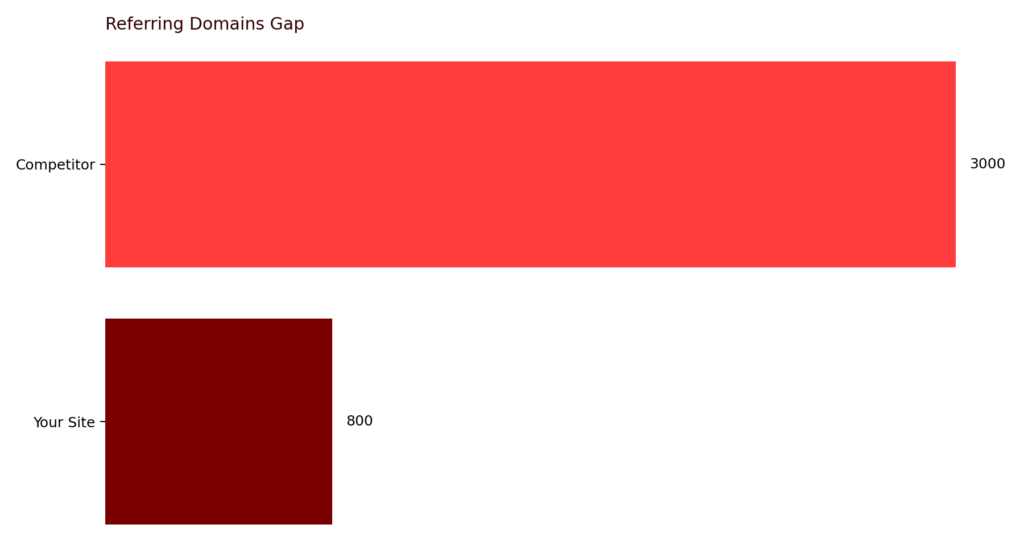
The more important output is not the score itself but the competitive gap: If your primary organic rival has 3,000 referring domains and you have 800, with the top quartile of their links concentrated in category-specific editorial publications, you have a clear picture of both the magnitude of the gap and the type of acquisition program needed to close it.
Define Link Targets by Quality Criteria, Not Volume
Set acquisition targets based on domain quality criteria rather than raw link counts. Establish a minimum threshold for referring domain authority (Moz DA or Ahrefs DR above 50 as a starting point).
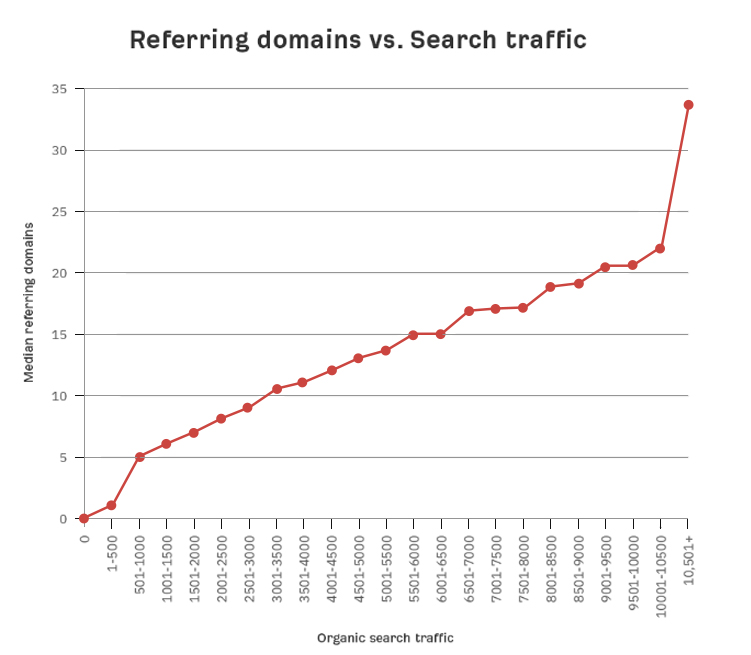
Combined with topical relevance to your category, this gives your program a quality filter that prevents time spent on links that will not move your authority profile.
Prioritize publications and sites that your actual target audience reads. A link from a high-authority domain in a tangentially related category is less valuable than a link from a moderately authoritative publication that is directly relevant to your industry. Relevance matters alongside raw authority.
Build the Content Assets Before Building the Links
The single most common link-building failure is attempting to acquire links without having content worth linking to. Outreach to high-quality publications with thin or generic content will not succeed regardless of how well the pitch is crafted.
The content brief for any page where you intend to build significant authority should start with the question: Why would a credible editor in this category link to this?
That question should shape the depth, the data, the angle, and the presentation of the content before a single outreach email is sent.
Measure What Matters Commercially
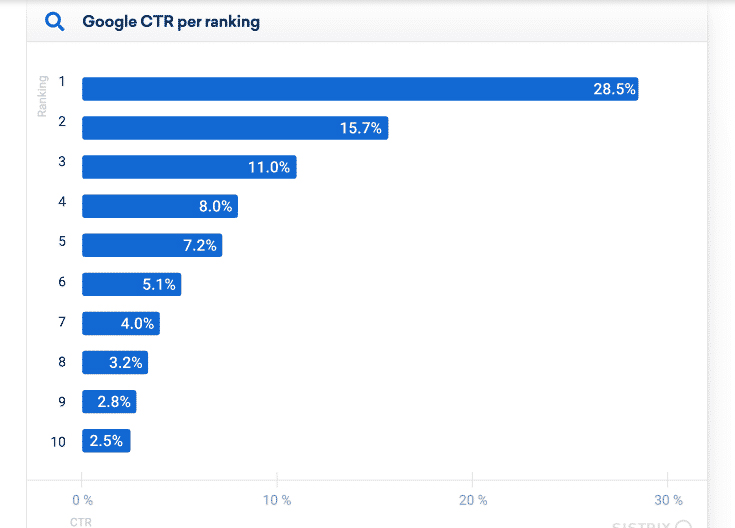
Track referring domain growth over time, domain rating trajectory, and organic visibility on non-branded competitive terms as leading indicators. Connect those to pipeline contributions by monitoring referral traffic conversion rates from editorial sources and tracking organic revenue by landing page category.
The metric that ultimately validates a link-building program is not keyword rankings. It is whether organic search is contributing meaningfully to revenue, at a cost-per-acquisition that justifies the investment compared to paid alternatives.
That requires closing the measurement loop between link acquisition activity and commercial outcomes, which most programs do not do.
The Compounding Power of Link Building in SEO
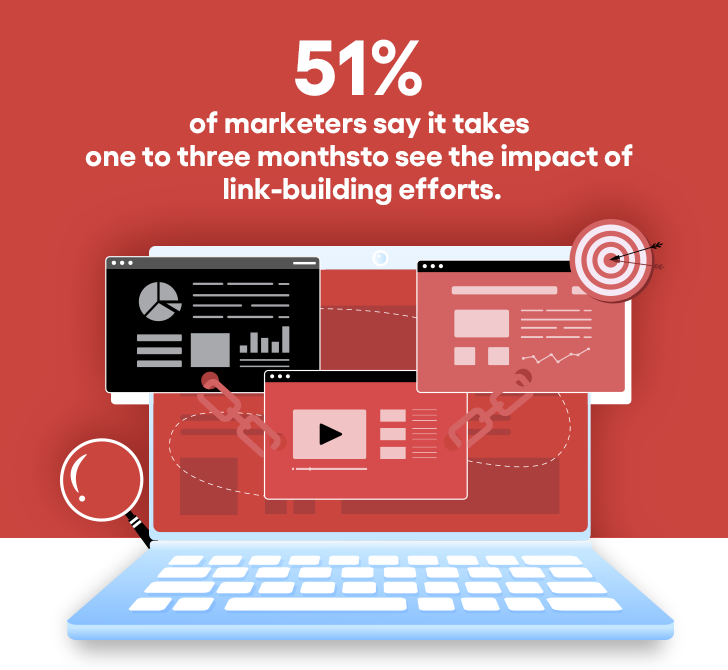
Link building returns are front-loaded in cost and back-loaded in benefit. That time lag is why it is consistently underinvested in despite being widely understood as a high-value activity. Brands that treat it as an ongoing capability win. Not a one-off campaign.
- They build real editorial relationships.
- They create link-worthy content consistently.
- They track authority over quarters, not weeks.
Over time, this compounds. And becomes very hard for others to catch up with.
The difference between a site with a strong, organically built backlink profile and a site without one is not just ranking position. It is the cost structure of your entire organic acquisition program. A high-authority site gets more yield from the same content investment. It ranks new content faster. It holds competitive positions more durably. Those advantages translate directly into lower CAC from organic and higher LTV from the customers’ organic search.
That is the case for taking link building seriously as a business function, not a marketing task.
Do You Have a Foolproof Backlink Profile for Your Business?
If you want to understand where your backlink profile stands relative to your organic competitors, what the quality distribution of your existing links looks like, and what a realistic acquisition program would require to close the authority gap, a link profile audit is the right starting point. Request a backlink analysis and competitive authority review to see clearly where the gaps are and what they are costing you in organic ranking potential.