
Google does not rank content. It ranks trust. E-E-A-T is the framework it uses to approximate that trust at scale, and if you are building a content strategy without understanding how it works, you are making decisions in the dark.
The acronym stands for Experience, Expertise, Authoritativeness, and Trustworthiness. Google’s Search Quality Evaluator Guidelines have used versions of this framework since 2014, initially as E-A-T. The additional “E” for Experience arrived in 2022, reflecting a meaningful shift in how Google distinguishes genuinely useful content from content that merely covers a topic correctly on paper.
Understanding E-E-A-T is not about passing a checklist.
It is about understanding what Google is actually trying to solve, because that understanding changes how you approach content architecture, author credibility, link strategy, and editorial standards across your entire site.
Why Google Built This Framework in the First Place

Google’s quality rater program exists because algorithm signals alone cannot fully determine content quality. Human raters evaluate thousands of pages against structured guidelines, and that feedback informs how ranking systems are refined over time. E-E-A-T is the conceptual spine of those guidelines.
The underlying problem Google is solving is real. At scale, low-quality content that mimics authoritative content is difficult to distinguish algorithmically. A page that covers all the right keywords, earns links from broadly relevant sites, and loads quickly might still give users genuinely harmful advice on a medical question or financially ruinous guidance on an investment decision.
E-E-A-T gives evaluators a structured way to ask:
- Should a reasonable person trust this content?
- Would they find it credible, given what they know about the source?
- Does the author have the standing to make these claims?
That question has different stakes depending on the topic. Which brings us to where this framework matters most.
E-E-A-T and YMYL: Where the Stakes Are Highest
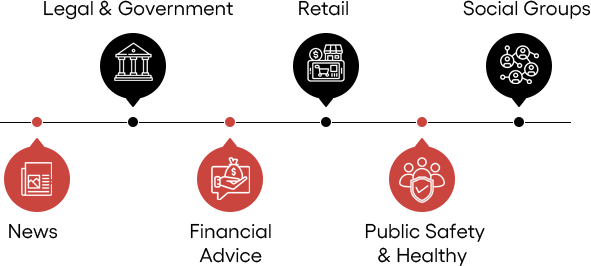
“Your Money or Your Life” is Google’s internal classification for content categories where inaccurate or misleading information could cause real harm to users. This includes financial advice, medical and health guidance, legal questions, safety information, and major life decisions.
For YMYL content, Google applies E-E-A-T standards more stringently. A general interest blog post about travel destinations does not face the same scrutiny as an article advising someone on medication dosages or investment allocation.
The former needs to be useful and accurate. The latter needs to be demonstrably credible, because the consequences of getting it wrong are materially different.
This is not an abstract concern. If you operate in a YMYL category, including health, finance, legal, insurance, or any sector where users make high-stakes decisions based on your content, E-E-A-T is not background noise. It is central to whether you rank at all.
The practical implication: YMYL sites that lack clear author credentials, have thin or unverified sourcing, and cannot demonstrate institutional trustworthiness will consistently underperform in search against competitors who have invested in those signals. It is not always about content quality in the narrow sense. It is about whether Google can extend trust to the source.
Breaking Down Each Component
Experience
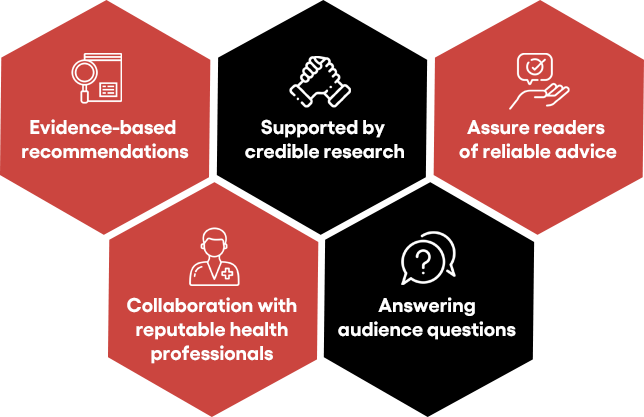
This is the newest addition and the one most commonly misunderstood. Experience refers to first-hand engagement with a topic, not simply subject matter knowledge.
The distinction matters because you can be an expert in a domain without having direct, personal engagement with the specific question being answered. A financial analyst knows markets. A financial analyst who has personally navigated a portfolio through a recession and written about that process from the inside demonstrates experience. A product review written by someone who has actually owned and used the product carries more credibility than one synthesized from spec sheets.
For content strategy, this means genuine experiential signals should be embedded where relevant. That might be a practitioner who writes about operational realities, a customer who describes solving a specific problem, or an author who contextualizes advice with real outcomes they have observed.
First-person specificity is a signal. Abstract authority is not.
Where brands get this wrong: Publishing content attributed to vague organizational voices rather than identifiable people with demonstrated backgrounds. “The Acme Team” is not an author. It communicates nothing about the experience behind the content.
Expertise
Expertise is domain knowledge, the depth of understanding that comes from professional training, extended study, or sustained practice in a field. It is demonstrated through the quality and accuracy of the claims made, the specificity of the guidance offered, and the absence of the kinds of errors that experts would not make.
HubSpot built a content empire on this principle. Its marketing blog earns authority not just because it publishes consistently, but because the content covers topics with genuine depth, is often authored by practitioners, and references real data rather than generalizations. That depth is legible to readers and, over time, legible to search systems through the behavioral signals that credible content generates.
For your content operation, expertise is reflected in editorial standards.
- Who reviews content before publication?
- What is the bar for a claim to be included?
- Are sources primary or secondary?
- Is nuance acknowledged where it exists?
The answers to those questions shape the output in ways that signal expertise to informed readers.
Authoritativeness
Authority is not self-declared. It is conferred by the broader ecosystem of sources that reference, cite, and link to your content.
Backlinks remain a primary authority signal, but the nuance matters here. A link from a tangentially related directory carries almost no weight. A citation in an editorial published by a major industry publication, a government health body, or a recognized academic source carries significant weight.
The signal is not the volume of links. It is the credibility of the linking sources and the relevance of the context.
Brand mentions without links also factor in. When credible publications discuss your company, reference your research, or feature your spokespeople, that creates authority signals even without a hyperlink. Digital PR, original research publication, and thought leadership placements build authority in ways that pure on-site content cannot replicate.
The mistake to avoid: Treating link building as a volume exercise. A high-authority site with a focused, credible backlink profile consistently outperforms sites with large numbers of low-quality links. Google’s systems are increasingly effective at distinguishing the two.
Trustworthiness
Trust is the foundational layer on which the other three components rest. A site can demonstrate experience, expertise, and authority and still fail on trust if it engages in misleading practices, provides inaccurate information, or operates without transparency.
Trustworthiness is built through consistency, publishing accurate information consistently, and transparent authorship. Corrections should be published when errors are identified. Privacy policies should be real, not performative. Terms should reflect what you actually do. Contact information should connect users to real people.
For e-commerce and service sites, trust signals include genuine customer reviews, clear return and refund policies, security certifications, and responsive customer support. For editorial sites, trust is built through sourcing standards, author transparency, and willingness to acknowledge the limits of available evidence.
One underappreciated element: How a site handles information it gets wrong. Sites that publish corrections prominently, acknowledge limitations, and update content when circumstances change demonstrate institutional trustworthiness that static, never-edited content cannot.
How E-E-A-T Actually Influences Rankings
A clarification worth making: E-E-A-T is not a direct algorithmic ranking factor in the sense that page speed or mobile-friendliness is. There is no E-E-A-T score that maps linearly to position in search results. What E-E-A-T does is serve as an evaluation framework that shapes how quality rater feedback informs ranking system development over time.
The practical effect is real, even if the mechanism is indirect. Content that demonstrates high E-E-A-T tends to generate the behavioral signals that ranking systems do measure directly:
- longer time on page,
- lower bounce rates,
- higher click-through rates from search,
- more backlinks from credible sources,
- more social sharing.
Those signals compound over time.
The more direct relationship is this: Google’s ranking systems are tuned to reward content that its quality raters would evaluate positively. E-E-A-T defines what a positive evaluation means. Building content that scores well against that framework therefore improves your probability of performing well organically, particularly in competitive and YMYL categories where the standard is highest.
Building E-E-A-T: What Operational Implementation Looks Like
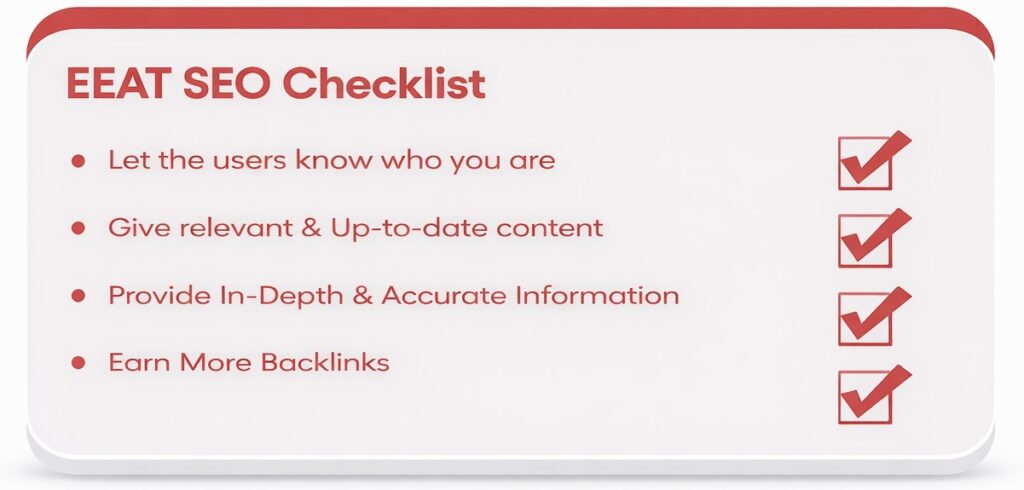
Author Profiles That Actually Communicate Credentials
An author byline without context adds no E-E-A-T value. What communicates value is a specific, verifiable record of the author’s background, like
- job titles in relevant industries,
- years of practice,
- professional certifications,
- publications elsewhere, and
- institutional affiliations.
Link author profiles to their professional presence on LinkedIn or other credible platforms. Make credentials verifiable.
For sites where multiple authors contribute, implement an editorial standards page that describes your review process.
Who checks content before publication? What sourcing standards are required? This kind of institutional transparency communicates trustworthiness at the organizational level, not just the individual level.
Source Standards That Withstand Scrutiny
Every factual claim that is not common knowledge should be sourced. Content that carries more weight than secondary summaries or aggregator sites includes
- primary sources,
- original research,
- government data,
- peer-reviewed publications, and
- direct interviews with subject matter experts.
When you cite statistics, link directly to the underlying source, not to the article where you found the statistic. This does two things:
- It validates the claim for your reader, and
- It demonstrates to Google that your content is grounded in verifiable information rather than a telephone game of secondhand citations.
Regular Content Audits Tied to Accuracy, Not Just Traffic
Most content audits focus on traffic performance. High E-E-A-T programs also audit for accuracy and whether or not the information is up-to-date. Information that was correct two years ago may now be outdated, superseded by new research, or simply no longer applicable to current conditions. Content that becomes inaccurate without being updated erodes trust over time.
Build a review schedule based on the content category. High-velocity topics (tax law, clinical guidelines, software features) require more frequent review than stable evergreen content. When content is updated, mark it clearly with a last-reviewed date, not just a publication date.
Digital PR and Original Research as Authority Levers
If you want authoritative backlinks, produce content that authoritative sources want to cite. Content that consistently earns editorial coverage and links in ways that opinion pieces and educational guides do not include
- original research,
- proprietary data, and
- well-structured survey findings.
This is an investment, but the compounding return justifies it.
A well-executed annual research report in your category can generate backlinks, press coverage, and social distribution every year it is referenced. The cost per acquired link decreases with each citation cycle while the authority signal strengthens.
Schema Markup as a Trust Signal Amplifier
Structured data does not directly improve E-E-A-T, but it helps Google correctly interpret the signals you are sending.
- Author schema communicates who wrote the content.
- Organization schema communicates institutional identity.
- Review schema communicates customer sentiment.
- Article schema communicates publication and update dates.
Getting schema right ensures that the trust signals embedded in your content are legible to search systems, not just to human readers. It is a relatively low-effort implementation with a meaningful return in SERP feature eligibility and crawl efficiency.
The E-E-A-T Gaps Most Sites Have Not Fixed
A few structural issues come up repeatedly when auditing sites in competitive categories:
No human author on high-stakes content.
Institutional voice works for brand communications. It does not work for medical, financial, or legal guidance where the reader needs to evaluate the credibility of the person giving the advice.
External links only to tier-one sources while ignoring primary research.
Citing the New York Times for a claim that the New York Times sourced from a CDC report is weaker than citing the CDC report directly. Go upstream.
Content that covers everything without depth.
Comprehensive coverage and genuine depth are not the same thing. A page that lists fifteen subtopics at two paragraphs each reads like a summary, not authoritative guidance. Where you have legitimate expertise, demonstrate it with specificity.
Trust signals that are decorative rather than functional.
A lock icon in the address bar is expected, not impressive. Functional trust signals are things like a real address, named team members with verifiable backgrounds, an active complaints and corrections policy, and consistent contact responsiveness.
The Strategic Frame
E-E-A-T is ultimately Google trying to answer a question on behalf of its users: Can we trust this source to give you a reliable answer?
Building genuine E-E-A-T signals is not a manipulation exercise. It is an alignment exercise. Institutions, individuals, and brands that have built real authority in their fields, that employ practitioners who produce content they would stake their professional reputation on, and that operate with genuine transparency, perform well over time because they are actually doing what Google is trying to identify.
The challenge for most organizations is not that they lack the underlying credibility. It is that they have not structured their digital presence to make that credibility visible and verifiable to search systems. That is the gap worth closing.
Check Out Where You Stand From an E-E-A-T Standpoint?
If you want a structured review of where your site currently sits on E-E-A-T signals and what the highest-priority fixes would be, a content and authority audit is the right starting point. Request a site teardown and get an honest read on where the gaps are and what closing them would require.