
The most candid thing you can say about sustainable marketing is that it has been nonoptional for many categories for several years.
What began as a brand differentiator has become table stakes in segments where buyers, whether consumers or procurement teams, have made environmental and social criteria part of their evaluation process.
That does not mean every business needs to build its entire identity around sustainability. It means every business needs to understand how much sustainability criteria influence purchase decisions in their specific market, and whether their current practices and communication align with what buyers are evaluating.
The gap between those two things, what buyers care about and what brands are communicating is where the real strategic work lives.
What Sustainable Marketing Actually Is (and Is Not)
Sustainable marketing is the practice of building brand positioning, communication, and business practices around environmental and social responsibility in ways that are both authentic and commercially coherent. The emphasis on “and” matters, since authenticity without commercial coherence is charity, and commercial coherence without authenticity is greenwashing.

It is distinct from cause marketing, which typically involves a brand attaching itself to an environmental or social issue as a campaign vehicle without necessarily changing underlying business practices. The distinction matters because consumers and business buyers have become increasingly sophisticated at identifying the difference. A one-time campaign donation to an environmental organization while maintaining unchanged supply chain practices does not constitute sustainable marketing. It constitutes PR, and it gets read as such.
Sustainable marketing at its most effective is an expression of how a business actually operates, communicated in a way that is specific, verifiable, and consistent across every touchpoint.
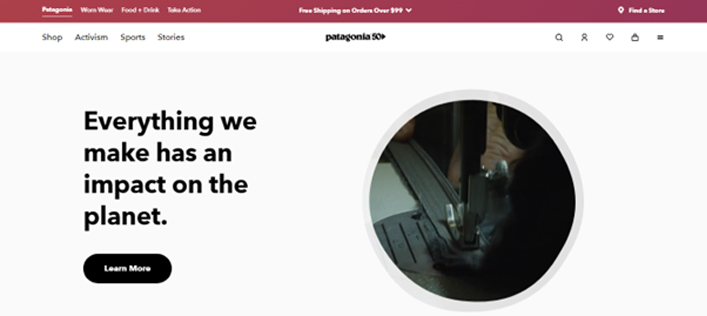
The Patagonia example is the canonical reference for a reason: Their positioning on environmental issues is the product of operational choices made over decades — product design, supply chain standards, repair programs, political advocacy — not a communications strategy that preceded the substance.
For most businesses, the starting point is an honest assessment of where they actually are, not where they want to appear to be.
The Business Case: What the Evidence Shows
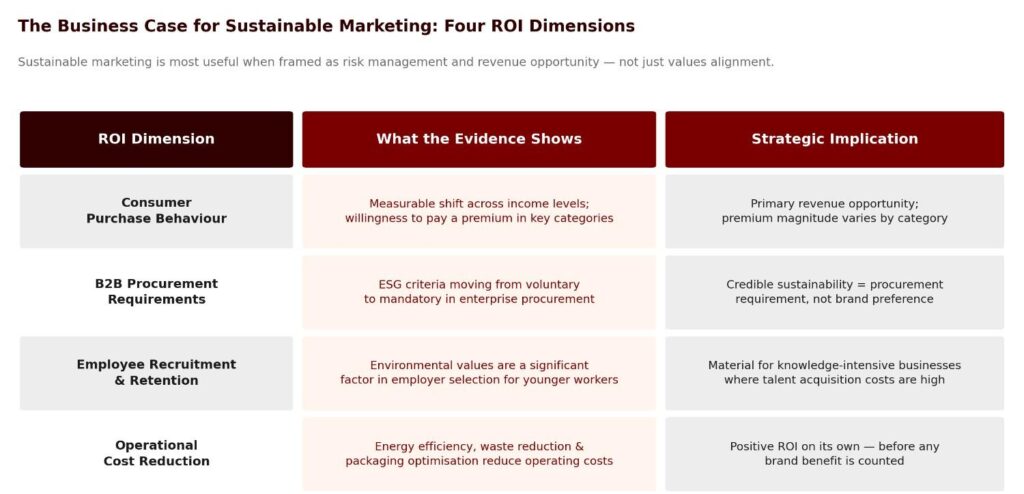
Sustainable marketing gets framed primarily as a values alignment exercise. The more commercially useful frame is risk management and revenue opportunity, which is where the evidence is more robust.
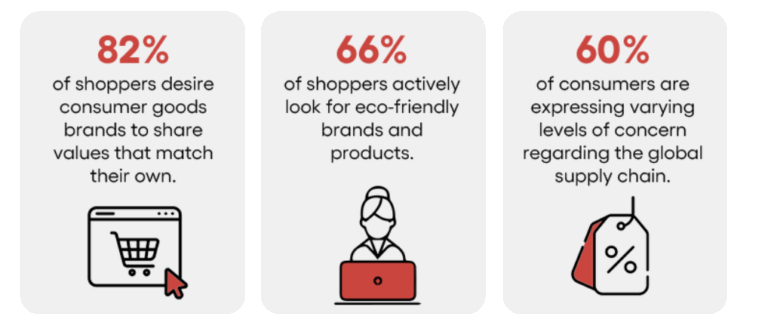
Consumer purchase behavior is shifting in measurable ways.
Research consistently shows that a meaningful share of consumers, across income levels, not just premium segments, factor environmental and social criteria into purchase decisions. Plus, a significant subset will pay a price premium for products they perceive as more sustainable.
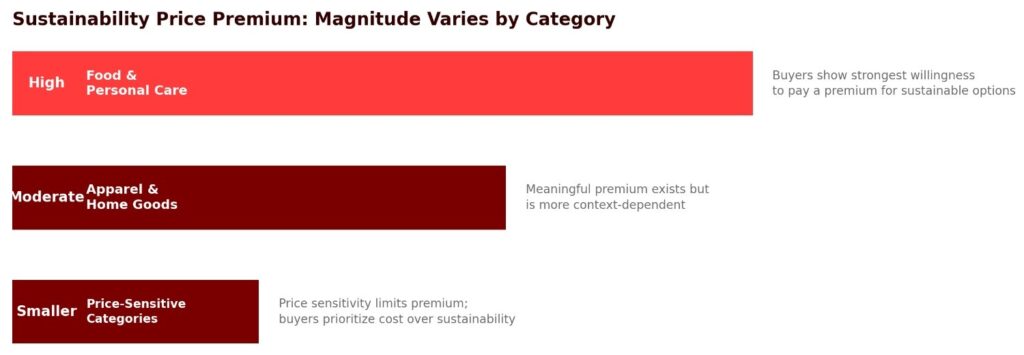
The magnitude of the premium varies significantly by category:
- substantial in food and personal care,
- moderate in apparel and home goods, and
- smaller in categories where price sensitivity dominates.
Knowing the actual number for your category, based on primary research with your buyer segments, is more valuable than citing industry averages.
B2B procurement requirements are becoming formalized.
Enterprise sustainability frameworks are moving from voluntary to mandatory in many industries. This includes
- Scope 3 emissions reporting requirements,
- supplier diversity programs, and
- ESG criteria in vendor selection.
For businesses selling to large enterprise customers, demonstrating credible sustainability practices is increasingly a procurement requirement rather than a brand preference.
The regulatory direction in major markets (EU sustainability disclosure requirements, SEC climate disclosure rules in the US) is toward greater mandatory transparency, which means the cost of not building these capabilities now will increase over time.
Employee recruitment and retention economics are real.
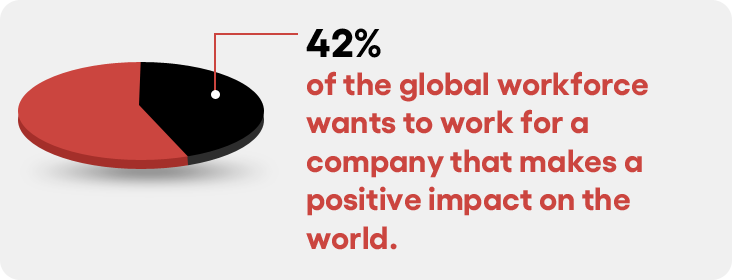
Multiple workforce surveys have found that environmental and social values are significant factors in employer selection for younger workers. Plus, the alignment between stated company values and observable practices affects retention.
The financial value of reduced turnover varies by role and industry, but for knowledge-intensive businesses where talent acquisition costs are high, this is a material consideration.
The cost reduction argument is underrated.
Energy efficiency, waste reduction, packaging optimization, and supply chain consolidation often reduce operating costs while reducing environmental impact. These are not soft benefits; they are quantifiable.
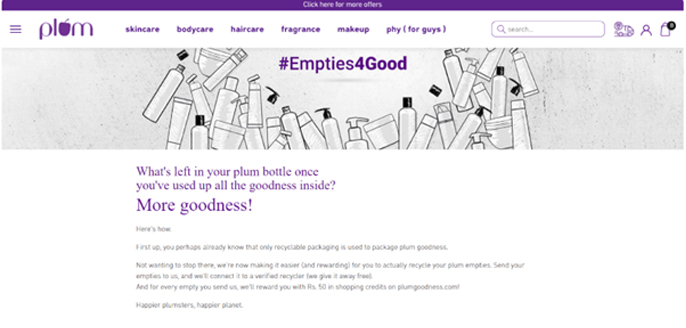
The Plum Beauty example of customer-return recycling programs illustrates this: The program reduces waste and simultaneously reduces manufacturing input costs by recovering materials. When sustainable practices are designed with operational efficiency in mind rather than purely with communication value in mind, they often produce a positive return on their own before counting any brand benefit.
The constraint worth naming: The relationship between sustainability investment and revenue return is not linear, not universal, and not immediate.
Businesses that invest in sustainable practices expecting a short-term revenue lift are often disappointed. Businesses that invest in them as a long-cycle brand and operational asset, while managing the communication carefully, tend to see returns that compound over time.
Greenwashing: A Costly Mistake
Before detailing what effective sustainable marketing looks like, the failure mode deserves direct attention because it is the most common source of brand damage in this space.
Greenwashing — claiming environmental or social credentials that are not substantiated by actual practices — has become significantly more costly as a brand risk in recent years. Three structural changes drive this:
Verification capability has democratized.
Social media users, journalists, NGOs, and even competitors have access to tools and networks that can quickly surface discrepancies between sustainability claims and underlying practices. What previously required investigative journalism now requires a moderately motivated social media user and a few hours.
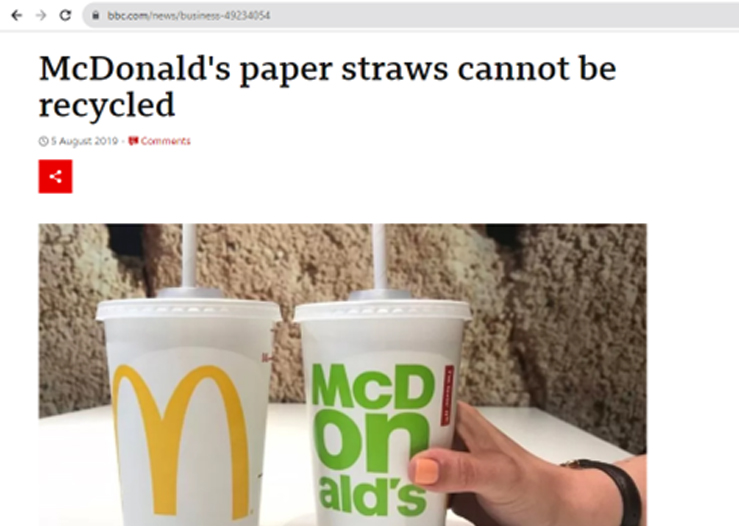
The McDonald’s paper straw case illustrates the dynamic perfectly: The brand made a public commitment to sustainability (replacing plastic straws with paper ones). That commitment was subsequently shown to be operationally hollow (the straws were not actually recyclable). The story was picked up by major press outlets. The reputational damage from the failed commitment exceeded the damage from the original plastic straw usage, because the claim created an expectation that the practice violated.
Regulatory enforcement is increasing.
Multiple jurisdictions are developing or enforcing regulations against misleading sustainability claims. Regulatory bodies that have taken up enforcement actions or signaled heightened scrutiny of environmental marketing claims include:
- The UK’s Competition and Markets Authority
- The EU’s Green Claims Directive
- The US Federal Trade Commission’s Green Guides
Legal exposure is a material consideration that the marketing function cannot evaluate in isolation.
Consumer trust, once damaged on sustainability, is particularly difficult to rebuild.
Brand trust research consistently shows that trust violations in the values-and-ethics domain are more persistent than trust violations in product quality or service delivery. Customers who feel they were deceived about a brand’s environmental practices tend to be permanently lost and vocally negative.
The practical implication: Sustainable marketing requires coordination between the marketing function and operational leadership. The marketing team cannot credibly represent sustainability commitments that operations have not made, and operations should not be making commitments without understanding how they will be communicated and what scrutiny they will face.
Sustainable Marketing Strategies That Build Value
Build Around Genuine Operational Commitment
The most durable sustainable marketing positions are expressions of operational decisions, not communications strategies.
- Allbirds built a brand around sustainable materials because the founders made product design choices that committed the company to those materials — the marketing follows the substance.
- Patagonia’s “Don’t Buy This Jacket” campaign worked because it was consistent with a decade of operational decisions about product quality and repairability that made the message credible.
For businesses earlier in the sustainability journey, this means identifying the operational areas where genuine commitment is already present or where commitment can be made authentically. Then, the task is to use this to build the marketing narrative from those points outward.
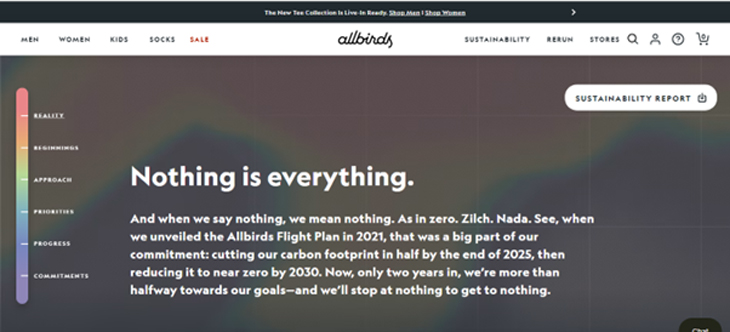
Overstating the degree of commitment, or claiming progress toward goals that are not yet operational, creates the conditions for credibility failure.
Set Specific, Measurable Commitments with Transparent Reporting
Vague sustainability positioning (“we care about the planet,” “committed to a greener future”) provides no differentiation because every brand in the category uses the same language. Specific, measurable commitments provide differentiation and, more importantly, accountability structures that force the operational follow-through that makes the positioning credible.
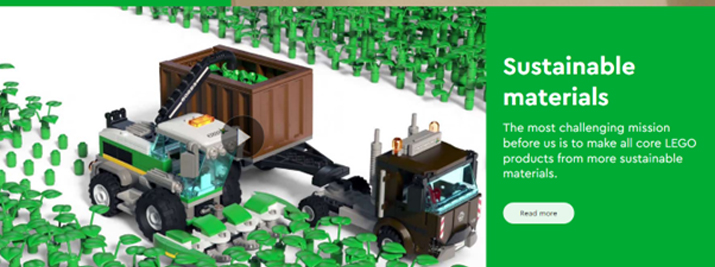
LEGO’s 2018 commitment to fully sustainable bricks by 2030 offers a powerful lesson. The timeline shifted, but the impact was real. Clear, specific goals drove meaningful operational investment. They also created public accountability that vague promises never achieve.
LEGO shared both progress and setbacks openly. This transparency strengthened trust instead of weakening it. It showed the commitment was genuine and not just performative.
The communication framework for sustainability commitments that holds up to scrutiny:
- state the specific goal, provide the current baseline,
- describe the mechanisms by which you are working toward it, and
- report progress honestly including where you have fallen short and why.
Educate Rather Than Advocate
Sustainable marketing that attempts to convert buyers to new values tends to be less effective than sustainable marketing that provides information to buyers who already hold relevant values. The distinction is significant for both strategic and budget reasons.
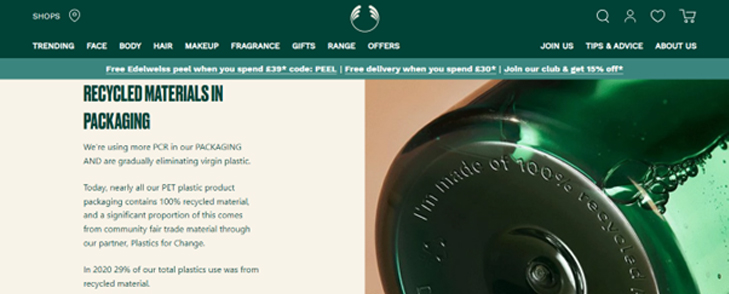
Buyers who care about environmental and social criteria are not looking for brands to lecture them about why those things matter — they already believe they matter. What they are looking for is specific, credible information that allows them to act on those values. The Body Shop’s consumer education around recycled packaging works not because it is trying to convince skeptics, but because it gives already-aligned buyers the information they need to feel confident their purchase choice reflects their values.
This framing also changes the content strategy.
Education-oriented sustainability content — how a product is made, what certifications mean and how they are earned, what the actual environmental impact data shows — performs better with sustainability-oriented buyers than advocacy content, because it is more informative and more verifiable.
Local Sourcing and Supply Chain Transparency as Brand Signals
Araku Coffee’s approach — sourcing directly from local farming communities, paying advance wages, providing agricultural support, and building that supply chain story into the brand — is a model for how local and ethical sourcing can create a coherent and defensible brand narrative. The story is specific, verifiable, and commercially differentiated in a commodity category that typically competes on price and convenience.
For businesses in categories where supply chain practices are increasingly scrutinized, supply chain transparency is not just a sustainability communication strategy, it is a risk management strategy.
Consumer and regulatory pressure on labor standards, environmental impact, and sourcing ethics in supply chains is increasing across most product categories. Building the capability to understand and communicate your supply chain story proactively is better than having it surface reactively through advocacy or journalism.

The practical starting point:
- map your supply chain at least one tier beyond your direct suppliers,
- identify the areas of greatest environmental or social impact (this is usually where the most impactful story and the greatest risk both live), and
- assess where transparency would build brand equity versus where it requires operational improvement before communication.
Consistency Across Every Touchpoint
Sustainable positioning fails most visibly when there is observable inconsistency between the sustainability claim and other brand behavior. A brand that claims environmental commitment while
- running promotions that encourage excessive consumption,
- using packaging materials that contradict stated environmental goals, or
- whose advertising in other markets does not reflect the sustainability positioning, creates the conditions for credibility damage.
This is an organizational coordination challenge more than a marketing challenge. The marketing team cannot manage brand consistency on sustainability without visibility into operations, procurement, packaging, product design, and customer service decisions that all touch the sustainability story.
Building that coordination — which typically requires executive-level commitment, not just marketing team effort — is the prerequisite for sustainable positioning that holds up over time.
Measuring Sustainable Marketing Effectiveness
The measurement challenge in sustainable marketing is real: the return on investment is partly financial, partly risk management, and partly a long-cycle brand asset that does not appear in short-term revenue data.

Organizations that measure sustainable marketing solely on campaign metrics are consistently disappointed because those metrics do not capture what the investment is actually producing.
A more complete measurement framework:
Brand perception tracking among target segments.
Survey your target buyer segments specifically on sustainability-related brand attributes — awareness, trust in sustainability claims, and purchase influence.
Track this against competitors. Changes in perception scores are a leading indicator of long-term revenue impact.
Conversion rate differential between sustainability-oriented and general buyers.
If your analytics infrastructure allows segmentation by buyer values (possible through survey data appended to purchase behavior, or through content engagement signals), compare conversion rates and LTV between buyers who engage with sustainability content and those who do not.
This quantifies the commercial value of the sustainability-oriented buyer segment.
Employee acquisition and retention cost data.
If sustainability is part of your employer brand, measure its real impact. Track how it affects applicant quality and application volume. Compare retention rates across different employee groups.
Focus on those who joined for company values versus those who did not. This shows whether your sustainability positioning truly drives talent outcomes.
Operational cost impact.
Track energy, waste, and material cost changes attributable to sustainability-motivated operational changes. This is often the most immediately quantifiable component of the ROI.
Revenue in sustainably-positioned product lines versus conventional alternatives.
If you have both sustainable and conventional product options, comparative performance data provides direct evidence of whether sustainable positioning affects purchase behavior in your category.
The Strategic Decision: The Depth of Your Commitment
This is the question that most sustainable marketing guides avoid, and it is the one most worth answering honestly.
The right level of sustainability commitment depends on your context. It varies by category, buyer segment, competition, and operational capability.
In high-scrutiny categories, expectations are higher. This is especially true when buyers care deeply about values. If competitors have made strong sustainability commitments, the bar rises further.
In these cases, surface-level sustainability marketing is risky. It creates more problems than it solves. Category expectations are already set. Failing to meet them can damage brand trust.
For some businesses, sustainability is not yet a primary buying factor. This is common in price-driven categories. In these cases, heavy sustainability investment may not deliver the highest ROI right now.
However, this window is narrowing. Regulatory pressure is increasing. Workforce expectations are also shifting. Delaying action may seem cost-effective today. But it is becoming a short-term strategy.
The most productive starting point is not “how can we market sustainability?” It is “what sustainability practices do we have or can we credibly build, and what is the honest story we can tell about them?”
Starting from the marketing strategy and working backward to find substantiating operational evidence almost always produces a weaker and more fragile position than starting from operational reality and building the communication from there.
Curious If Your Brand is Positioned for Sustainable Marketing?
If you want to assess where your current sustainable marketing position is relative to buyer expectations in your category — and whether the practices you have are being communicated in a way that builds rather than risks brand equity — that conversation is worth having before the next planning cycle.