
The brands that struggle to scale past a certain revenue ceiling are usually not underinvesting in performance marketing. They are overinvesting in it relative to brand, and the compounding effects of that imbalance show up in their unit economics before they show up in their traffic data.
CAC trends upward. Return on ad spend declines quarter over quarter. Paid channels require increasing budgets just to maintain revenue, not grow it.
Customer lifetime value stagnates because there is no brand equity pulling retention. The acquisition treadmill speeds up, and the margin for error narrows.
This is the practical consequence of treating performance marketing as a standalone growth strategy rather than as one half of a commercial system.
This piece lays out how that system actually works, where most organizations get the balance wrong, and how to think about the allocation decision with real rigor.
Why This Is a Business Strategy Question
The performance-versus-brand debate gets framed as a marketing question because it lives in marketing budgets. But the underlying tension is between two different theories of how a business grows and defends its position.
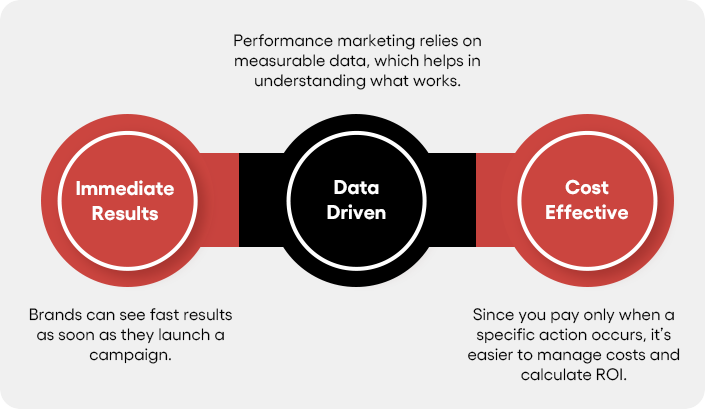
Performance marketing operates on a model of direct response:
- spend capital,
- generate measurable output,
- optimize the ratio between the two.
The math is clean, and the feedback loops are short. That cleanness is what makes it attractive to finance teams and growth-stage operators who need to show quarterly progress.
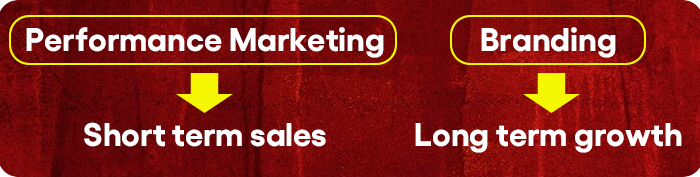
It is also what makes it insufficient as a complete strategy. Performance marketing converts demand. It does not create it.
Brand marketing operates on a different model:
Invest in recognition, trust, and preference over a sustained period, such that future performance campaigns become more efficient and future customers arrive with lower resistance to conversion.
The math is murkier, and the feedback loops are long. The payoff is that an established brand faces structurally lower CAC and higher retention than a pure performance player competing on the same terms.
The brands that have built genuinely durable market positions, the ones with stable or declining CAC even as their categories get more competitive, have typically done so through the compounding effect of consistent brand investment alongside performance marketing.
They are not choosing between the two. They are managing the ratio between them deliberately.
What Performance Marketing Actually Does (and Does Not Do)
Performance marketing encompasses
- paid search,
- paid social,
- affiliate programs,
- display retargeting, and
- any other channel where spend is directly tied to a measurable action (click, lead, purchase, or install).

The defining characteristic is that the feedback loop is short and the attribution is direct.
The commercial case for performance marketing is straightforward: It targets people who are already in a buying cycle, it is adjustable in near-real-time based on outcome data, and it scales predictably within a given cost envelope.
For most businesses, it is the primary driver of short-term revenue and the tool most relied on during launch phases, promotional periods, and when the business needs to demonstrate immediate return on investment.
What performance marketing does not do, and this is the point most pure-performance strategies eventually run into: It does not expand the pool of potential buyers.
It works within existing demand. It reaches people who already have a reason to be searching for your category. When those people convert and the addressable pool in any given period is exhausted, performance campaigns hit a ceiling that additional spend cannot push through.
The other structural limitation: Performance marketing operates in an environment that gets more expensive as more competitors discover the same channel.
Average CPCs in most commercial categories have risen substantially over the last decade. The efficiency gains that early performance marketing adopters enjoyed are largely competed away.
What remains is a market where every competent operator is using similar tools, similar targeting, and similar creative frameworks, which means performance marketing alone cannot create meaningful differentiation.
Common strategic mistake: Scaling performance marketing spend as the primary response to a revenue plateau. The result is usually rising CAC and declining ROAS, because the problem is not insufficient spend, it is insufficient brand awareness and preference in the broader market.
What Brand Marketing Actually Does (and Does Not Do)
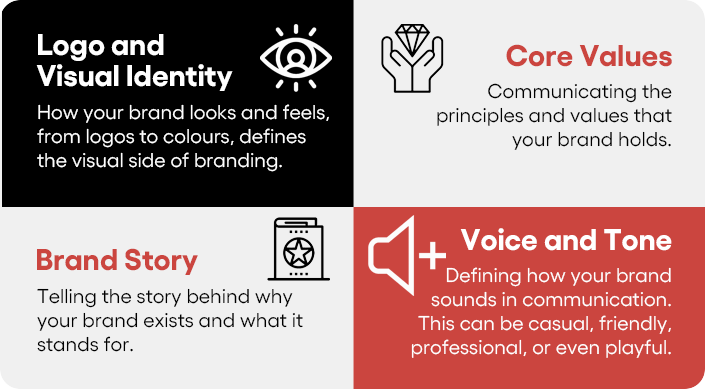
Branding is the cumulative process of shaping how your company is perceived in the minds of people who may eventually buy from you. It operates through every customer touchpoint:
- advertising creative,
- content,
- product experience,
- customer service,
- visual identity,
- pricing signals,
- community presence, and
- the associations built through consistent behavior over time.

The commercial function of brand investment is to shift the default. When a potential buyer in your category begins the purchase process, a recognized and trusted brand has a head start. The cognitive work of evaluating options is partially done. The cost of conversion is lower. The willingness to pay is often higher. The resistance to switching to a competitor is greater.
These effects compound. A brand that has earned strong recognition and positive associations in its category does not start from zero each quarter. It carries accumulated equity into every subsequent campaign. That equity is not perfectly durable; it erodes if it is not maintained, but it is a structural advantage that pure performance players do not have.
What brand marketing does not do: Generate immediate, attributable revenue.
This is the legitimate criticism of brand investment and the reason it gets deprioritized under short-term financial pressure. Brand campaigns typically work on timelines of six to eighteen months before their effects are visible in performance metrics.
Leadership teams managing quarterly targets find this uncomfortable, and that discomfort is understandable.
The trade-off is real. Brand investment requires accepting a delay between spend and measurable return. The question is not whether that delay exists; it does, but whether the long-term return justifies the near-term cost. For most businesses in competitive categories, the answer is yes, because the alternative is an acquisition cost structure that never improves.
The premium pricing dimension is worth naming explicitly: Established brands can charge more for functionally similar products than unbranded competitors. Gucci’s brand value was estimated at roughly $17.8 billion in 2023. Nike’s advertising deliberately avoided product-feature messaging for decades in favor of identity-based brand building. The price premium that brand equity enables is a structural margin advantage that does not show up in any performance marketing dashboard.
The Binet and Field Research: What It Actually Says
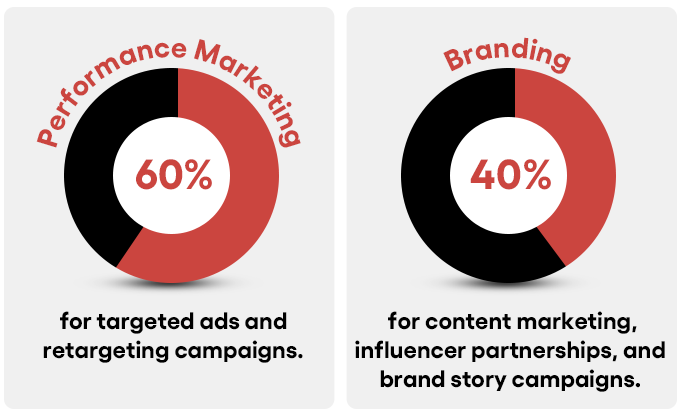
The most cited framework for thinking about the performance-brand allocation is the work of Les Binet and Peter Field, derived from decades of IPA Effectiveness Awards case studies. Their most discussed finding is the general guideline that allocating roughly 60% of a marketing budget to brand-building and 40% to sales activation (performance marketing) tends to produce better long-term business outcomes than other ratios.
This ratio is useful as a starting point for conversation. It is not a universal prescription. Binet and Field’s own work includes significant caveats that rarely make it into the summaries.
The ratio varies substantially by category.
High-consideration, long-purchase-cycle categories like financial services, automotive, and B2B enterprise software typically require more brand investment relative to performance than low-consideration, frequent-purchase categories like consumer packaged goods.
The right ratio for a subscription SaaS company is different from the right ratio for an e-commerce fashion brand, which is different again from a DTC supplement company.
The ratio also varies by business stage.
A pre-revenue startup with limited brand recognition and immediate survival requirements has a different allocation logic than an established market leader defending margin and share. Early-stage businesses often need to focus on performance marketing because they need proof of demand and near-term cash flow. That weighting should shift as the business matures and the compounding case for brand investment becomes more financially viable.
The deeper insight in Binet and Field’s work that gets less attention: Brand building and sales activation do not just coexist. They amplify each other. Brand investment improves the efficiency of performance marketing by raising awareness and preference before a user encounters a paid ad. Performance marketing converts the demand that brand investment helped create. The interaction effect between the two is where the real value lives.
How to Think About the Allocation Decision
There is no formula that produces the correct brand-to-performance ratio for your specific business. There are, however, a set of diagnostic questions that clarify where you should be on the spectrum.
What is happening to your CAC over time?
If CAC is rising consistently despite stable or improving targeting and creative quality, the most likely explanation is insufficient brand awareness.
Performance campaigns are reaching the same pool of high-intent buyers repeatedly. The marginal buyer is harder to convert because they have no prior familiarity with the brand.
Brand investment addresses the root cause. More performance spend treats the symptom.
What is your organic search traffic trend?
Organic traffic is a reasonable proxy for brand strength because people search for brands they know.
If your branded search volume is growing, your brand is building presence. If your category traffic is not converting at improving rates over time, brand preference may be insufficient to pull users toward your business when they have choices.
What does your retention curve look like?
High churn, particularly early churn, is sometimes a product problem. But it is also often a signal that customers acquired through performance channels had misaligned expectations.
This can happen because the brand communication did not accurately set expectations before the transaction. Brand investment that honestly represents your product to prospective buyers tends to improve retention by attracting better-fit customers.
What is your competitive positioning?
In categories where your competitors are investing heavily in brand, pure performance strategies will eventually face ROAS pressure because competitor brand equity advantages their conversion rates across the entire funnel.
The asymmetry in brand investment becomes an asymmetry in cost structure that compounds over time.
Positioning Content as the Structural Bridge
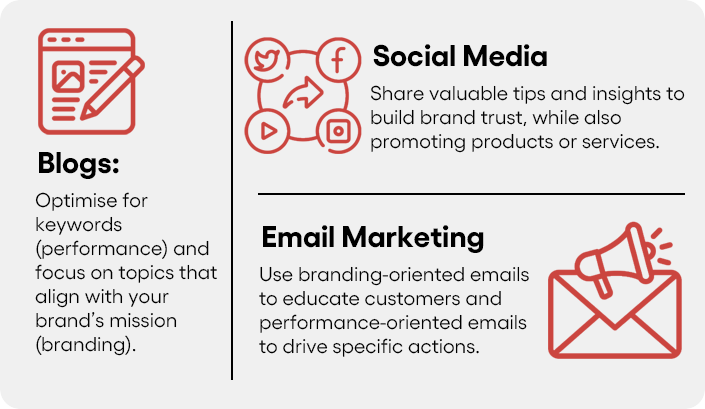
One of the most practical ways to fund both brand and performance objectives from a single investment is through content that serves both purposes.

The strategic logic: Content built to rank organically for commercial-intent searches builds brand authority while generating traffic that converts without per-click cost. Over time, a strong content library reduces dependence on paid acquisition for category awareness.
A detailed buyer’s guide for your product category builds brand credibility with users who are researching before they purchase. The same content ranks for commercial investigation keywords, driving organic traffic with purchase intent.
It supports retargeting campaigns with users who engaged with it. It provides material for email nurture sequences. It earns backlinks that improve overall domain authority.
This is not a new insight. The execution challenge is that content with genuine commercial depth requires real investment, both in the expertise to produce it and the time to build the keyword authority needed for it to rank. Teams that try to execute content marketing with thin, quickly produced articles do not get these compounding returns. The content has to be genuinely useful to earn the authority that makes the strategy work.
The common execution mistake: Creating content that is brand-driven without search-intent alignment, or creating search-optimized content that lacks brand voice and perspective. The most effective content does both. It ranks because it matches what users are searching for, and it builds brand preference because it reflects a distinctive, credible point of view.
How to Measure Brand Without Losing the Budget
The hardest operational challenge for brand investment is not the strategy. It is defending the spend in planning cycles when finance and leadership teams want the same attribution rigor they get from performance channels.
Brand attribution is genuinely more complex than performance attribution. You cannot tag a display impression the way you tag a paid click and follow it through to a conversion event with confidence. The effects of brand investment are distributed across time, channels, and customers in ways that last-click and even multi-touch attribution models do not capture accurately.
That said, there are measurement approaches that provide a meaningful signal:
Brand search volume trends are a reliable leading indicator of brand awareness.
If your branded search volume is growing, the brand is building recognition. This metric is available in Google Search Console and correlates reasonably well with brand health over time.
Share of search compares your branded search volume against competitors in your category.
It is a relative measure of brand strength and tracks directional changes in market position more reliably than absolute traffic numbers.
Marketing mix modeling (MMM) is the most rigorous approach for understanding the contribution of brand investment to business outcomes across a longer time horizon.
It requires meaningful data volume and statistical expertise to execute well, which puts it out of reach for smaller organizations, but for mid-market and enterprise businesses running sustained brand campaigns, it is worth the investment in infrastructure.
Organic conversion rate trends offer an indirect signal.
If your organic conversion rate is improving over time, it suggests that the people finding your brand have a higher prior preference for it, which is consistent with effective brand building.
None of these measures is as clean as ROAS from a paid search campaign. That is a genuine limitation. The honest framing for leadership conversations: Brand investment is held to a different measurement standard, not because it lacks business impact, but because its impact operates on a different timeline and through different mechanisms than performance marketing.
Building the Budget Case for Brand Investment
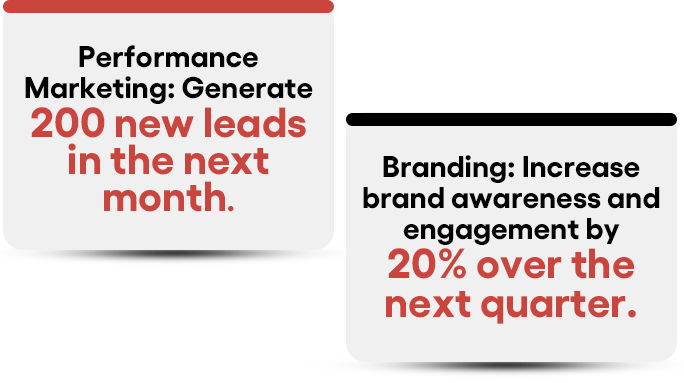
For growth operators who need to make the internal case for shifting budget toward brand, the argument structure that tends to land is grounded in CAC trajectory rather than marketing philosophy.
The case: If our current performance-heavy allocation is producing rising CAC with declining ROAS, the incremental performance spend is generating worse returns than it did twelve months ago. The structural reason is insufficient brand equity in the category. The alternative allocation, investing a portion of the performance budget into brand, is expected to lower future CAC by improving awareness and preference before users encounter our performance campaigns. The projected payback period is twelve to eighteen months, with sustained improvement in efficiency metrics thereafter.
That framing connects brand investment to the commercial metrics leadership cares about, frames it as a strategic response to a measurable problem, and sets realistic expectations for the timeline. It is more likely to get support than an argument rooted in brand theory.
The counter-risk worth acknowledging honestly: This thesis can be wrong.
Brand investment does not guarantee improved performance efficiency, particularly if the brand creative is not resonant or the targeting is misaligned.
Setting up measurement infrastructure before the brand investment begins, so that the hypothesis can be tested and adjusted, is part of managing that risk responsibly.
Closing Thoughts
The performance-versus-brand framing is ultimately a false choice. The real question is how to sequence and proportion the two strategies given your current business position, competitive environment, and commercial objectives.
For most businesses in mature or maturing categories, the ceiling on purely performance-driven growth is lower than it appears when the business is scaling well. Brand investment is what extends that ceiling, improves unit economics over time, and builds the kind of market position that is genuinely difficult for a well-funded competitor to replicate quickly.
Getting that balance right does not happen by applying a fixed ratio. It happens through deliberate measurement, honest diagnosis of what is driving your CAC and retention trends, and a willingness to make longer-horizon bets even when short-term accountability pressure pulls in the other direction.
Want to Learn the Impact of Your Current Budget Allocation?
If you want to pressure-test your current allocation between brand and performance, or understand which of your marketing investments is actually contributing to commercial outcomes versus just activity, a strategic review of your mix is worth the conversation. Explore what that looks like for your team.