Most marketing leaders have sat through some version of this pitch: guaranteed first-page rankings, proprietary tools that “work with Google’s algorithm,” traffic numbers that will transform the business. It sounds authoritative. It rarely is.
The SEO industry has a credibility problem, and it’s largely self-inflicted. A subset of agencies has spent years conflating activity with outcomes, vanity metrics with pipeline contribution, and short-term ranking lifts with durable competitive advantage.
The result: CMOs who’ve been burned once or twice now treat SEO investment the same way they treat cold outreach from vendors, with measured skepticism and short patience for noise.
That skepticism is actually useful. It means you’re asking sharper questions. The problem is knowing which claims deserve scrutiny and which represent genuinely sound strategies.
What follows is a direct breakdown of the most common misrepresentations in SEO agency sales and delivery, not to help you evaluate pitches, but to help you build the internal mental model for what good looks like.
The Claims That Should End the Conversation Immediately
“We guarantee top rankings on Google.”
No agency can make this promise. Not with credibility.
Search rankings are determined by Google’s algorithm, which weighs hundreds of signals simultaneously:
- domain authority,
- content relevance,
- user behavior,
- competitive landscape,
- technical health, and more.
That algorithm updates continuously and without notice.
The agencies making this guarantee are typically doing one of two things: targeting low-competition, low-value keywords that are easy to rank for but unlikely to drive meaningful traffic, or deploying aggressive tactics that produce short-term visibility and medium-term penalties.
Neither serves your business.
What a competent agency guarantees is process: consistent technical hygiene, content quality, and backlink acquisition strategy. Outcomes follow from that over time, with reasonable benchmarks set against competitive difficulty.
“We can rank you for every keyword on your target list.”
This one tends to surface in scope-of-work conversations, and it signals a lack of strategic discipline. Keyword targeting is a prioritization exercise, not a volume play. A list of 200 keywords with wildly different intent, competition levels, and conversion probability is not a strategy, it’s a deliverable that looks comprehensive and produces diffuse results.
What you actually want is a tighter cluster of high-value terms mapped to commercial intent, supported by a topical authority architecture that earns broader rankings over time as your domain builds relevance.
“We’ll deliver ROI in X days.”
The timeline on this varies by agency, but the structure of the claim is always the same: a fixed return by a fixed date. SEO simply does not work on that schedule. Rankings take time to build, organic traffic compounds gradually, and conversion attribution in SEO requires enough volume to be statistically meaningful.
That said, you should expect to see leading indicators within 60–90 days:
- crawl health improvements,
- indexation rates,
- early keyword movement on long-tail terms, and
- engagement metrics on newly published or refreshed content.
What you shouldn’t accept is a hard revenue guarantee with an arbitrary deadline. That’s either a misunderstanding of how the channel works or a setup to claim credit for outcomes driven by other activity.
The Operational Myths That Quietly Erode Campaigns
“SEO is a one-time fix.”
The agencies that position SEO as a finite project, audit, implement, and done, are selling you a deliverable, not a result.
Search is a dynamic environment:
- Competitor activity shifts.
- Algorithm updates change what gets rewarded.
- User behavior evolves.
Content that ranked well 18 months ago may have since been overtaken by more authoritative, more current sources.
Ongoing SEO means:
- continuous content development,
- regular technical audits,
- proactive link acquisition, and
- quarterly strategy review against business performance.
The compounding nature of organic search is real, but it only compounds if you keep feeding it.
“You don’t need to update existing content.”
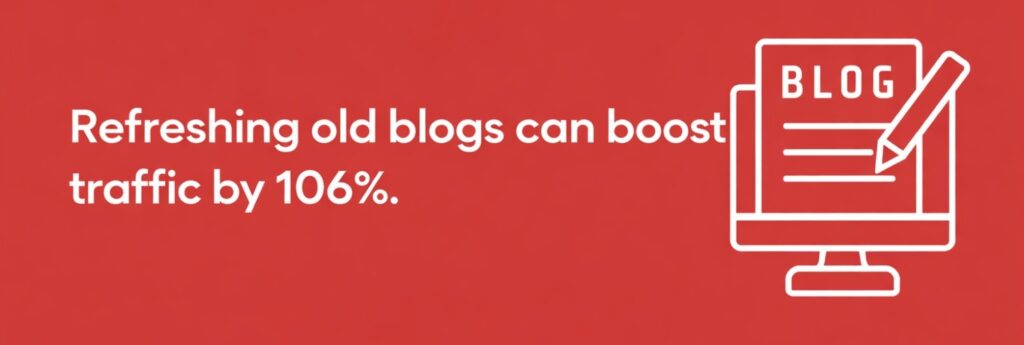
There’s consistent evidence across the industry that refreshing existing content produces outsized results relative to the effort involved. A post that once ranked on page two with outdated statistics, weak internal linking, and a structure that no longer matches search intent can often be reclaimed with a targeted update, sometimes faster than building new content from scratch.
More importantly, letting content decay means watching earned rankings erode.
Search engines prioritize freshness on many queries, and competitors aren’t standing still. A content maintenance program is not optional if you’re trying to defend positions you’ve already built.
“More traffic equals better performance.”
Traffic without context is noise. An agency that leads with session volume as the primary success metric is telling you something about how they’re measured internally, and it’s not how you should be measuring them.
What matters is qualified traffic: Visitors whose search intent aligns with what you offer, at a stage in the funnel where your content moves them.
A 40% increase in organic sessions driven by informational keywords that never convert is a cost, not a result. The right frame is
- traffic quality and downstream impact,
- assisted conversions,
- lead quality from organic, and
- organic contribution to the pipeline.
That’s the conversation worth having.
“Technical SEO is all you need.”
Technical SEO is a prerequisite, not a strategy. Crawlability, indexation, page speed, Core Web Vitals, and schema markup create the conditions for ranking. They do not, by themselves, produce rankings.
An agency that over-indexes on technical work without equal attention to content quality and off-page authority is solving for necessary but insufficient conditions. The sites that consistently outrank competitors in competitive categories do so because they’ve built genuine topical depth and earned authoritative backlinks, not because their Lighthouse scores are marginally better.
The right architecture is: technical foundation first, then content and authority development in parallel, with ongoing technical maintenance throughout.
The Strategic Gaps Most Agencies Won’t Acknowledge
“Backlinks are the primary ranking factor.”
Links matter. They remain one of the stronger signals in Google’s algorithm. But the relationship between link acquisition and ranking is not linear, and the quality distribution within a backlink profile matters more than volume.
A hundred links from low-authority, topically unrelated sites contribute far less than ten links from authoritative sources with genuine relevance to your niche. Agencies that optimize for link count over link quality are often running scaled outreach programs that produce the former.
Over time, this creates a profile that looks busy on paper and delivers diminishing returns or worse, attracts algorithmic scrutiny.
What actually works: Link acquisition through legitimate content that earns citations, digital PR, expert contributions to authoritative publications, and strategic relationship-building. Slower to scale, but the returns are durable.
“Paid ads can replace organic search.”
Paid search and organic search serve different functions in the acquisition mix.
- Paid provides immediate, controllable traffic that stops the moment the spend stops.
- Organic builds a compounding asset (rankings, topical authority, brand recognition in search) that continues producing after the initial investment.
For most businesses, the strategic case for SEO is only partly about efficiency. Over time, cost-per-acquisition from organic channels tends to decline while paid CAC tends to inflate as competition increases.
That doesn’t make SEO the right answer in every context. But treating it as a substitute for paid, or vice versa, misunderstands what each channel is built to do.
“Local SEO doesn’t apply to your business.”
If any part of your customer acquisition involves geography — a physical location, service area, regional sales territory — local SEO deserves specific attention.
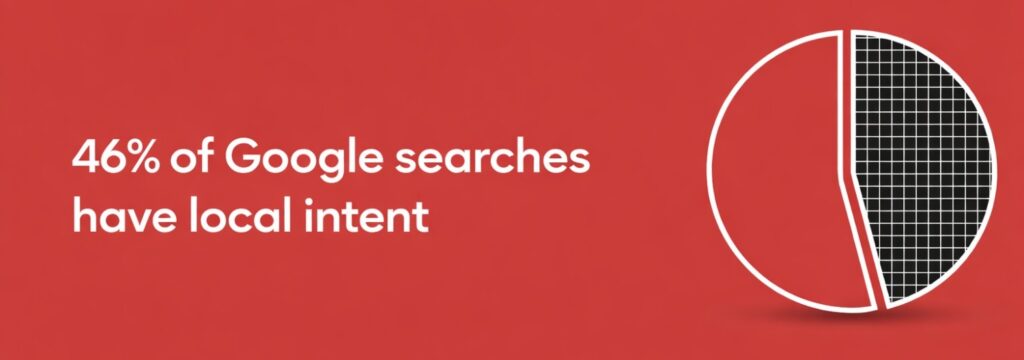
The share of Google searches with local intent is substantial, and the competitive set for local results is typically narrower than national SERPs.
Important levers that many businesses leave unpulled include:
- Google Business Profile optimization,
- review acquisition strategy,
- local citation consistency, and
- landing pages built for regional intent.
For companies with distributed locations or territory-based sales, this is often where the most accessible ranking opportunity sits.
“Social media has no relationship to SEO.”
The direct impact of social signals on Google rankings is minimal at best. But the framing of social as irrelevant to SEO misses how content discovery actually works.

Content that gets meaningful distribution on social channels earns more visibility, generates more backlinks organically, and drives more branded search, all of which contribute to SEO performance over time.
The more accurate framing: Social media is a distribution layer that amplifies the return on content investment. It doesn’t replace the fundamentals, but ignoring it leaves reach and link acquisition on the table.
The Credibility Signals Worth Watching
Beyond specific claims, there are patterns of behavior that tell you something about how an agency operates.
Lack of specificity in the strategy.
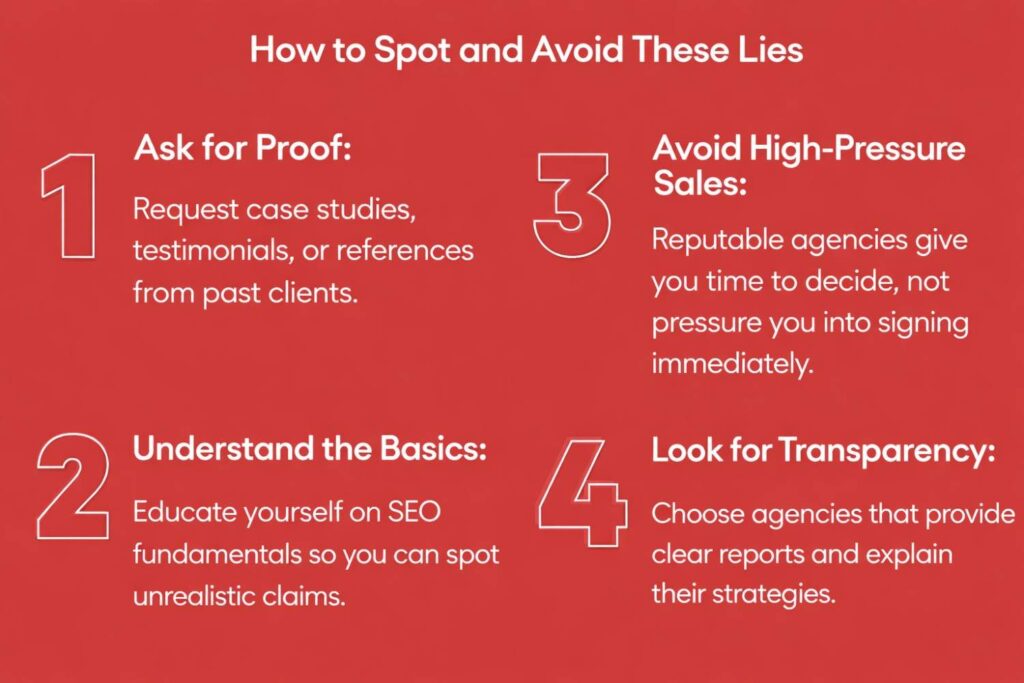
Reputable agencies can explain exactly what they’re doing and why, in terms that connect to your business goals. If the strategy conversation stays at the level of “we’ll improve your rankings through proven techniques,” that’s a service description, not a plan.
Opacity in reporting.
SEO performance should be reported in a way that ties activity to outcomes. If the reporting you’re receiving is a keyword ranking dashboard without any connection to traffic trends, conversion data, or business metrics, you’re not getting the information you need to evaluate whether the engagement is working.
Resistance to collaboration.
The agencies that produce the best results treat the client relationship as genuinely collaborative. They need context about
- your business,
- your customers,
- your competitive positioning, and
- your revenue goals to build a strategy that’s actually relevant.
An agency that positions client involvement as unnecessary is either running a templated playbook that doesn’t require customization, which is a problem, or doesn’t know what questions to ask.
Urgency tactics in the sales process.
Any agency pressuring you toward a fast decision with time-limited pricing or scarcity framing is optimizing for close rate, not for fit. That’s useful information about how they operate.
What Good Actually Looks Like
A credible SEO partner will:
- Set expectations grounded in competitive reality and your current domain strength
- Build strategy around business outcomes, not activity volume
- Report on the leading indicators early and the lagging indicators honestly over time
- Acknowledge trade-offs openly — budget constraints, timeline realities, what you’re giving up by prioritizing one thing over another
- Invest in understanding your business before prescribing solutions
- Be willing to tell you when SEO is not the right investment for a specific goal at a specific time
The firms worth working with are not the ones making the biggest promises. They’re the ones asking the sharpest questions and giving you the most honest picture of what’s realistic.
A Framework for Evaluating Any SEO Claim
When you hear a claim from an SEO agency — in a pitch, in a proposal, in a performance review — run it through three filters:
Specificity: Can they explain precisely how this outcome will be achieved, and what inputs drive it? Vague confidence is not expertise.
Accountability: What are the measurable milestones, and what happens when they’re not hit? Good agencies are comfortable with accountability structures.
Alignment: Does this outcome actually matter to your business? Rankings and traffic are inputs. Revenue impact is the output. Are they connected in the way being described?
Those three questions will resolve most of the ambiguity in evaluating SEO partners and they’ll expose most of the claims that don’t hold up under scrutiny.
Want to Make the Most of Your SEO Strategy?
If you’re currently assessing your SEO strategy or an existing agency relationship and want a candid second opinion on what you’re seeing, that’s a conversation worth having. No pitch, no pressure — just an honest read on where you are and what’s realistic from here.